SMU–SEAIT OJT Learning Packet: Advancing Global Internship Excellence and Societal Transformation
The School of Engineering, Architecture, and Information Technology (SEAIT) of Saint Mary’s University continues to demonstrate academic leadership through the strategic utilization of its recalibrated On-the-Job Training (OJT) Learning Packet. This initiative is an offshoot of the study “Enhancing Regional Transformation: Recalibrated On-Site Diversified Planning and Design in Region II,” authored by Dr. Liberty A. Rosario in collaboration with Engr. Candido Joseph Rosario R. Jr. and Engr. Joy Rianna Agrimor. The learning packet was crafted to promote a holistic and sustainable internship framework anchored on diversified planning and design initiatives that respond to the evolving demands of society.
SEAIT-OJT-LEARNING PACKET
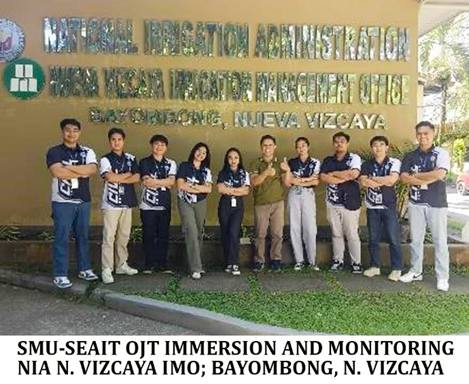
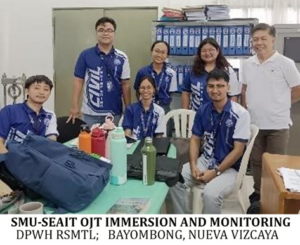
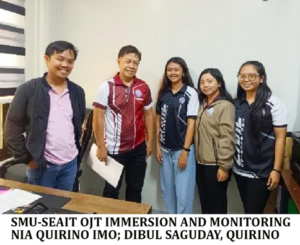
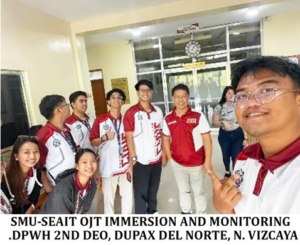
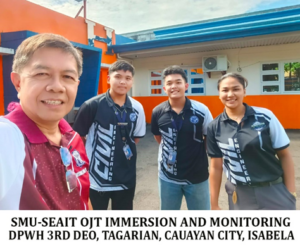
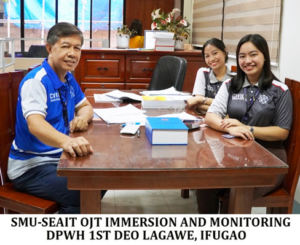
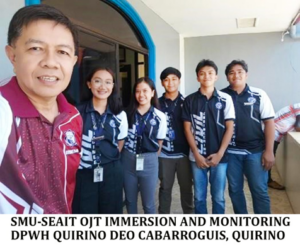
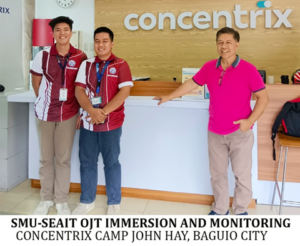
Grounded in SEAIT’s vision and mission of producing competent and innovative professionals, the learning packet strengthens industry partnerships across Regions I, II, III, and the Cordillera Administrative Region (CAR). Through intensified immersion, supervision, and monitoring, the OJT program ensures that students are equipped not only with technical competence but also with social responsibility and adaptability to contemporary challenges.
The OJT program is continuously re-appropriated and recalibrated to align with emerging trends and industry needs. Its goal extends beyond producing board passers; it aims to nurture socially responsive professionals capable of contributing meaningfully to planning, design, and sustainable development. The program underscores that societal transformation cannot be achieved in isolation but requires strong collaboration among educational institutions, industry partners, and government and non-government organizations.
Civil engineering, together with allied engineering disciplines, plays a crucial role in shaping sustainable communities. The study highlights the pivotal contribution of engineering interns in promoting sustainable construction practices, particularly in concrete technology and infrastructure development. Their participation reinforces the necessity for environmentally responsible and resilient engineering solutions in addressing global environmental and economic challenges.
Civil engineering, together with allied engineering disciplines, plays a crucial role in shaping sustainable communities. The study highlights the pivotal contribution of engineering interns in promoting sustainable construction practices, particularly in concrete technology and infrastructure development. Their participation reinforces the necessity for environmentally responsible and resilient engineering solutions in addressing global environmental and economic challenges.
The success of the utilization project is attributed to the strong cooperation among public and private institutions that willingly shared facilities, expertise, and resources. This partnership emphasizes the importance of institutional linkages in strengthening internship programs. Moreover, the study highlights the role of procurement policies and regulatory frameworks in encouraging sustainable development practices, underscoring the importance of collaboration between engineers and policymakers in shaping future-ready planning and design strategies.
The OJT Learning Packet serves as a comprehensive guide for the 240-hour internship program. It provides clear, systematic procedures that ensure consistency, accountability, and quality across all internship engagements. These procedures include:
- Evaluation and enrollment at the Dean’s Office
- Pre-deployment orientation by the OJT adviser
- Submission of endorsement letters to partner industries
- Completion of all OJT requirements prior to deployment
- Signing of the Memorandum of Agreement (MOA) with partner industries
- Conduct of the Hard Hatting and Pinning Ceremony
- Deployment to partner institutions
- Continuous monitoring of internship activities
- Submission and evaluation of student portfolios upon completion
Through this structured process, the learning packet ensures that students experience a guided, reflective, and outcomes-based internship.
The OJT program affirms that professional learning extends beyond classroom instruction. True education emerges from the integration of theory with authentic field experience. The role of the OJT adviser is therefore critical in providing close supervision, mentorship, and academic guidance throughout the internship journey.
As a recognized Center of Development in Civil Engineering, SMU–SEAIT continues to uphold its commitment to quality education and global relevance. The learning packet entitled “Re-appropriating and Recalibrating Learning Packet on Diversified Planning and Design Initiatives Towards an Enhanced Internship Program in a University” stands as a concrete utilization output of this commitment. Initially implemented during the Mid-Year Term AY 2024–2025, it now serves as the standard reference for all SEAIT interns.
Ultimately, the OJT Learning Packet exemplifies SEAIT’s dedication to producing graduates who are technically competent, socially responsible, and globally competitive. Through sustained collaboration, policy alignment, and innovative internship practices, the program continues to contribute meaningfully to societal transformation through education, professionalism, and sustainable engineering practice.
Grounded in SEAIT’s vision and mission of producing competent and innovative professionals, the learning packet strengthens industry partnerships across Regions I, II, III, and the Cordillera Administrative Region (CAR). Through intensified immersion, supervision, and monitoring, the OJT program ensures that students are equipped not only with technical competence but also with social responsibility and adaptability to contemporary challenges.
SDG 17 Partnerships for the Goals
|