SEAIT faculty participate in Siemens Indonesia PSS®SINCAL seminar
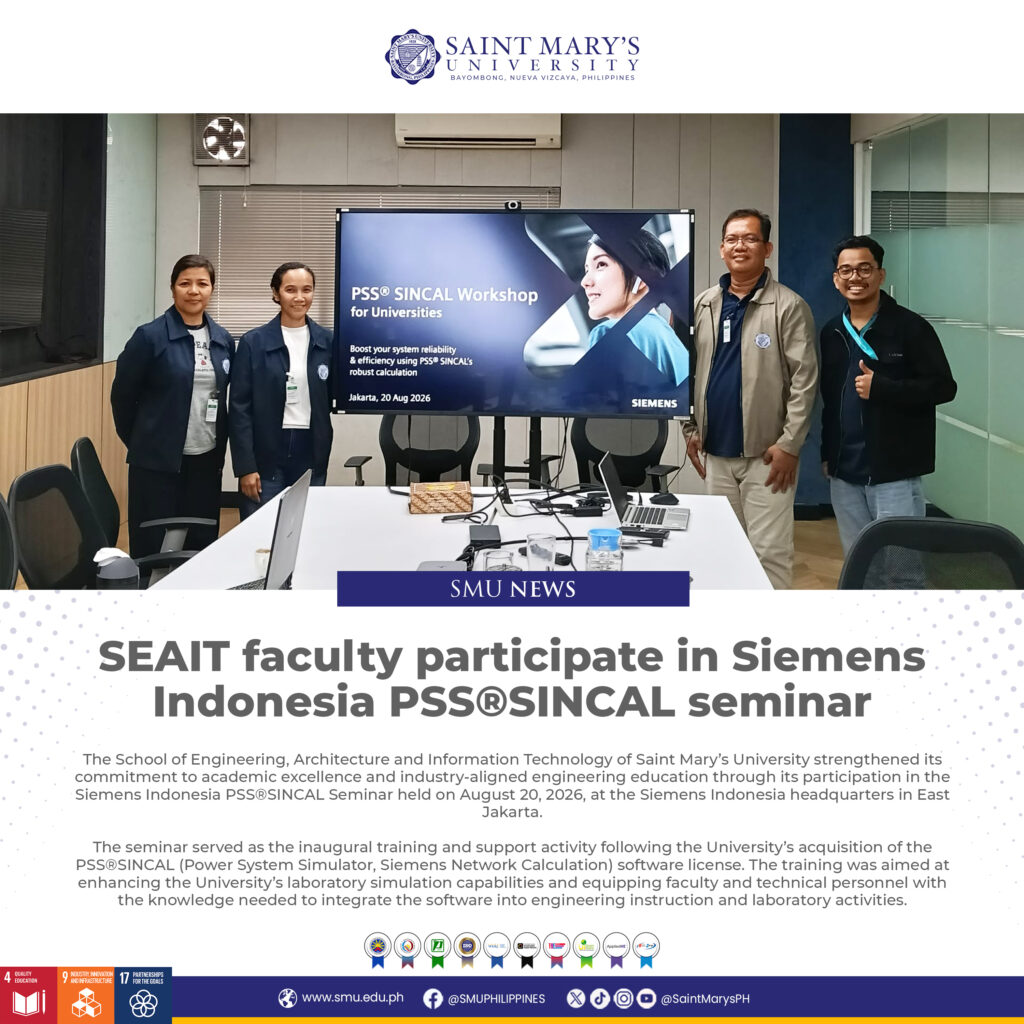
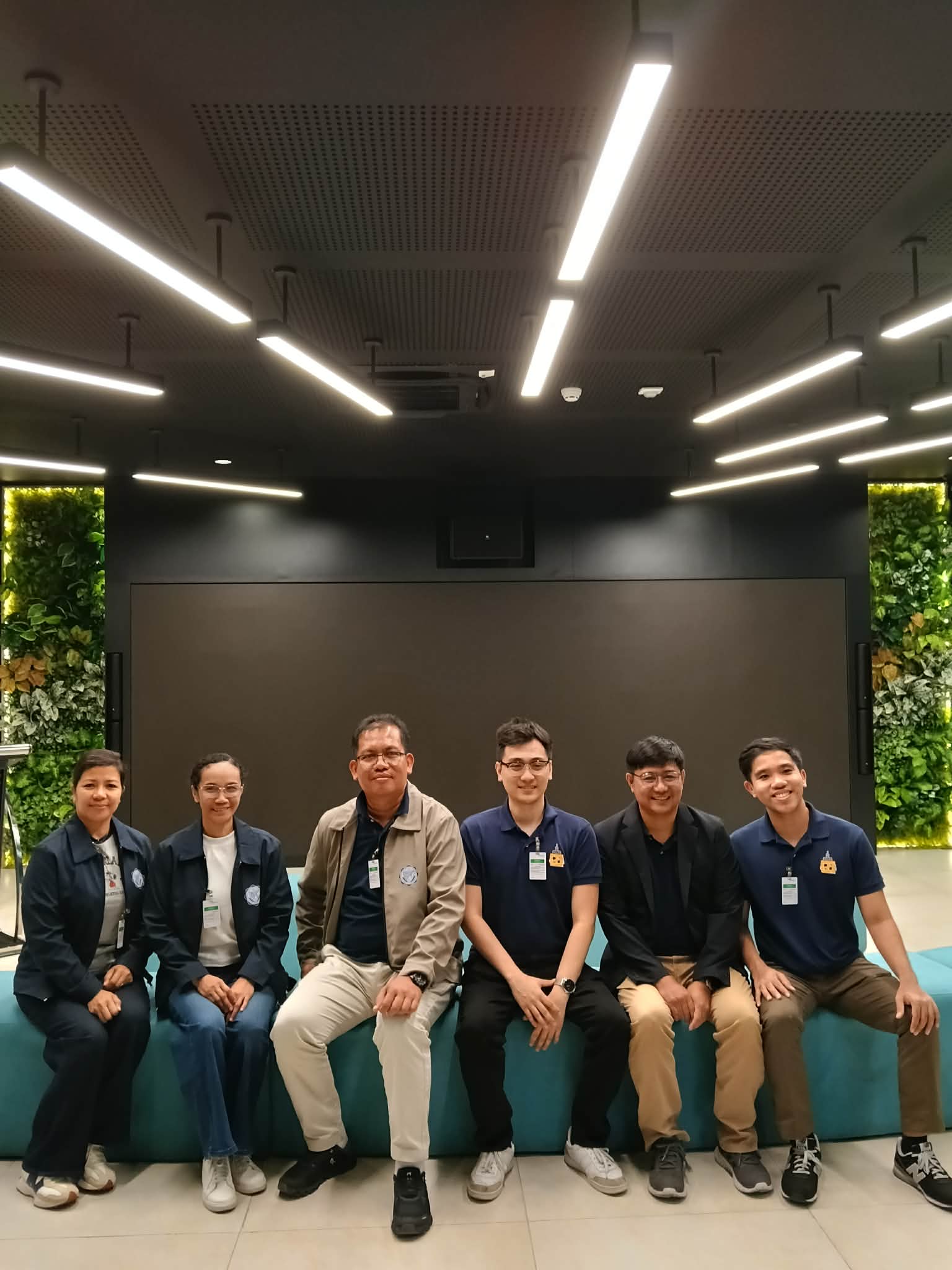
The School of Engineering, Architecture and Information Technology of Saint Mary’s University strengthened its commitment to academic excellence and industry-aligned engineering education through its participation in the Siemens Indonesia PSS®SINCAL Seminar held on August 20, 2026, at the Siemens Indonesia headquarters in East Jakarta.
The seminar served as the inaugural training and support activity following the University’s acquisition of the PSS®SINCAL (Power System Simulator, Siemens Network Calculation) software license. The training was aimed at enhancing the University’s laboratory simulation capabilities and equipping faculty and technical personnel with the knowledge needed to integrate the software into engineering instruction and laboratory activities.
Representing Saint Mary’s University were Engr. Carina S. Mallillin, OIC Dean of SEAIT, Engr. Jojo C. Mariano, and Mrs. Elizabeth F. Ramos, Laboratory Assistant for the EE, ECE, and CpE Laboratory. Their participation reflected a multidisciplinary approach involving academic leadership, faculty, and technical support personnel, with the goal of exploring applications of PSS®SINCAL across engineering programs.
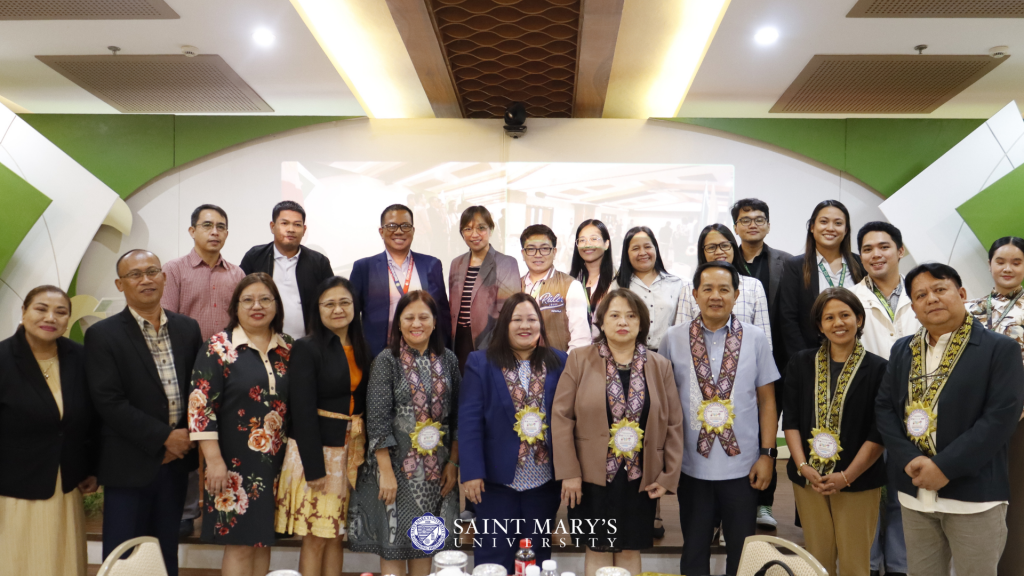
The seminar was conducted as a joint initiative with the University of Santo Tomas (UST), whose representatives also participated in the activity. The collaboration provided an avenue for inter-university cooperation, benchmarking, and the exchange of practices in the integration of advanced simulation tools into engineering education.
The participation of both institutions highlighted the importance of building professional networks and strengthening shared standards in engineering education. It also provided opportunities for academic institutions to align their instructional practices with industry-leading platforms used in professional engineering environments.
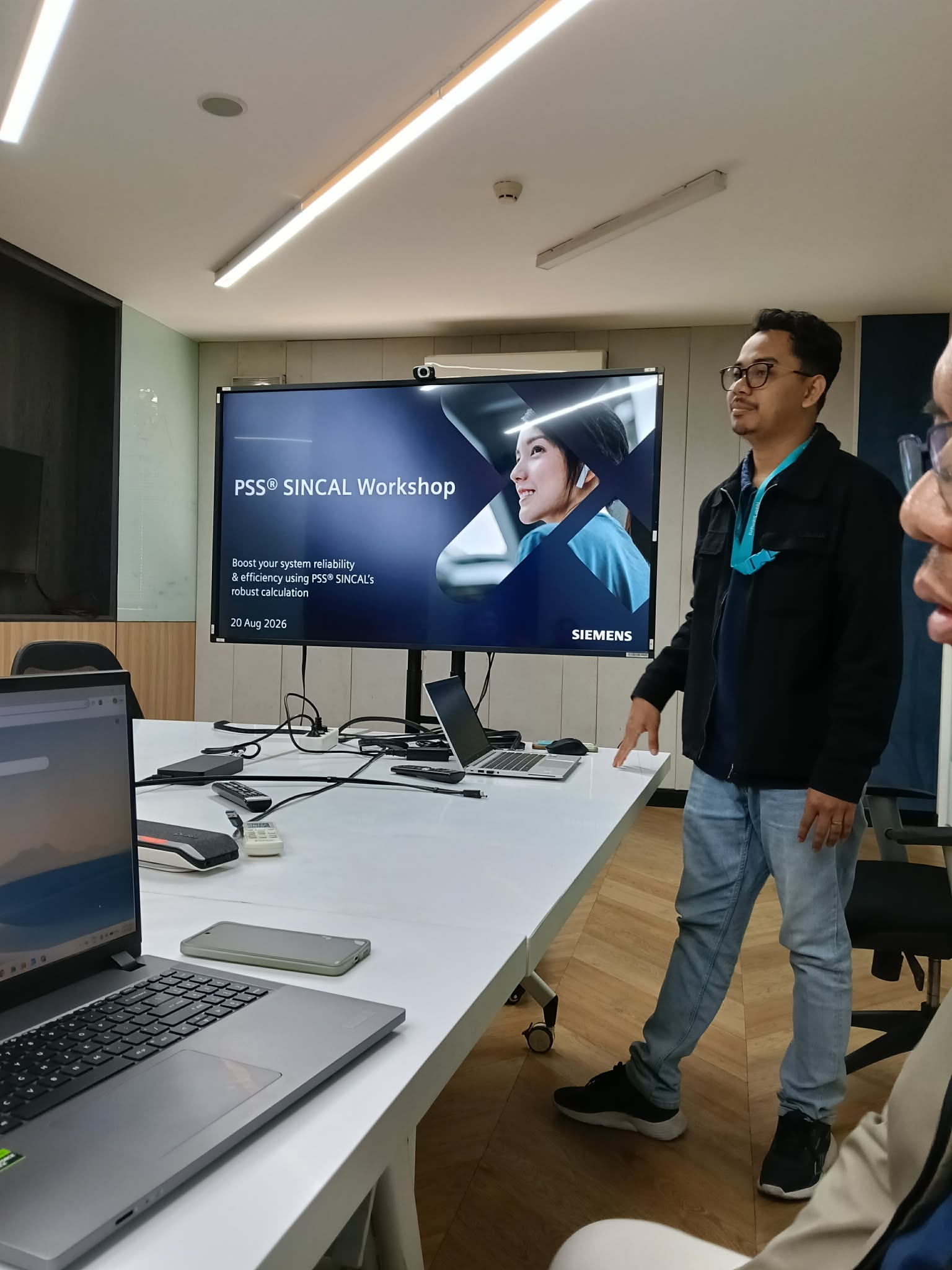
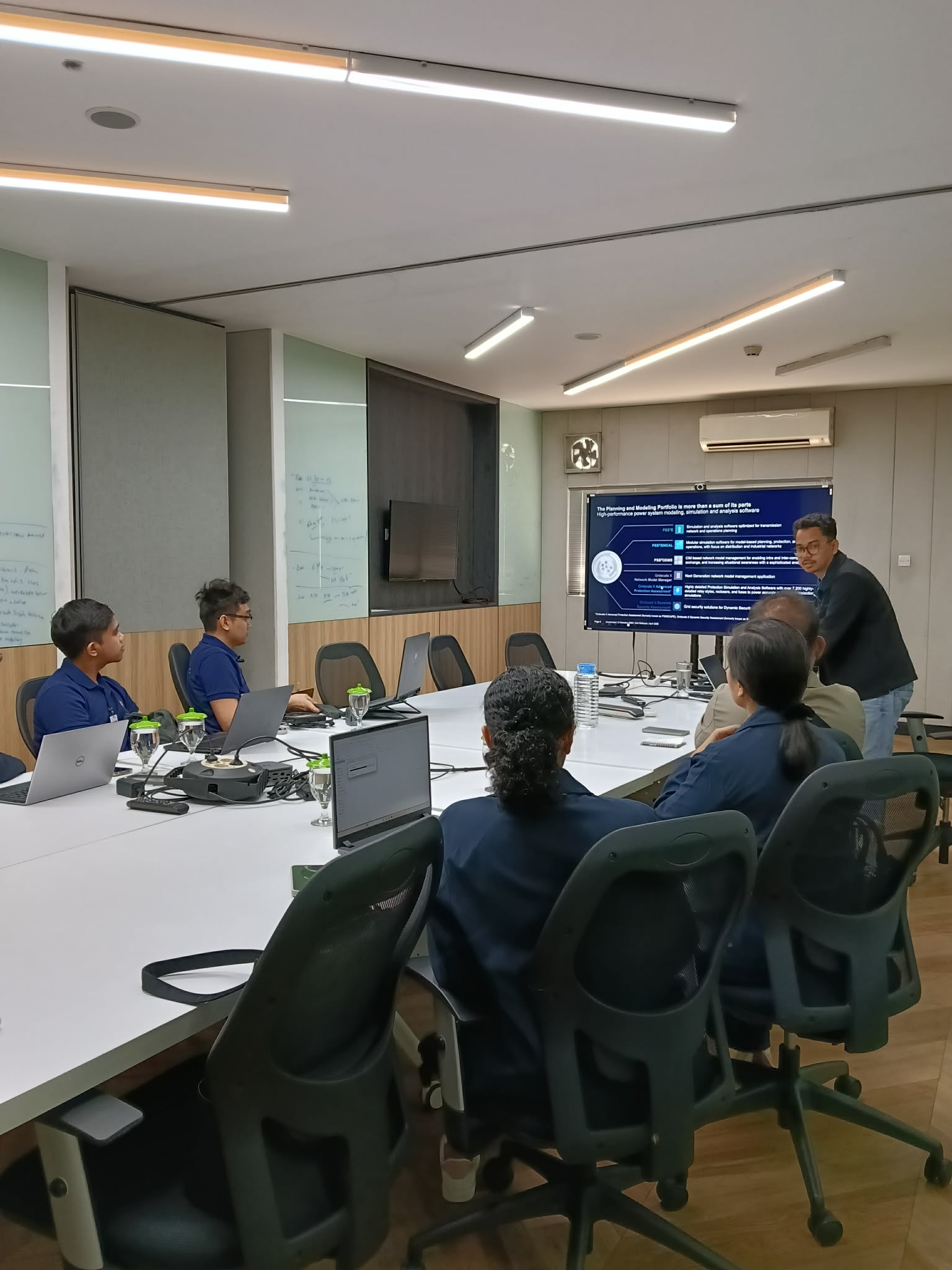
A major component of the seminar was the technical training on the PSS®SINCAL platform, facilitated by Mr. Restu of Siemens Indonesia. The training focused on developing faculty proficiency in power system simulation and network calculations, particularly in relation to the increasing complexity of modern power systems and smart-grid integration.
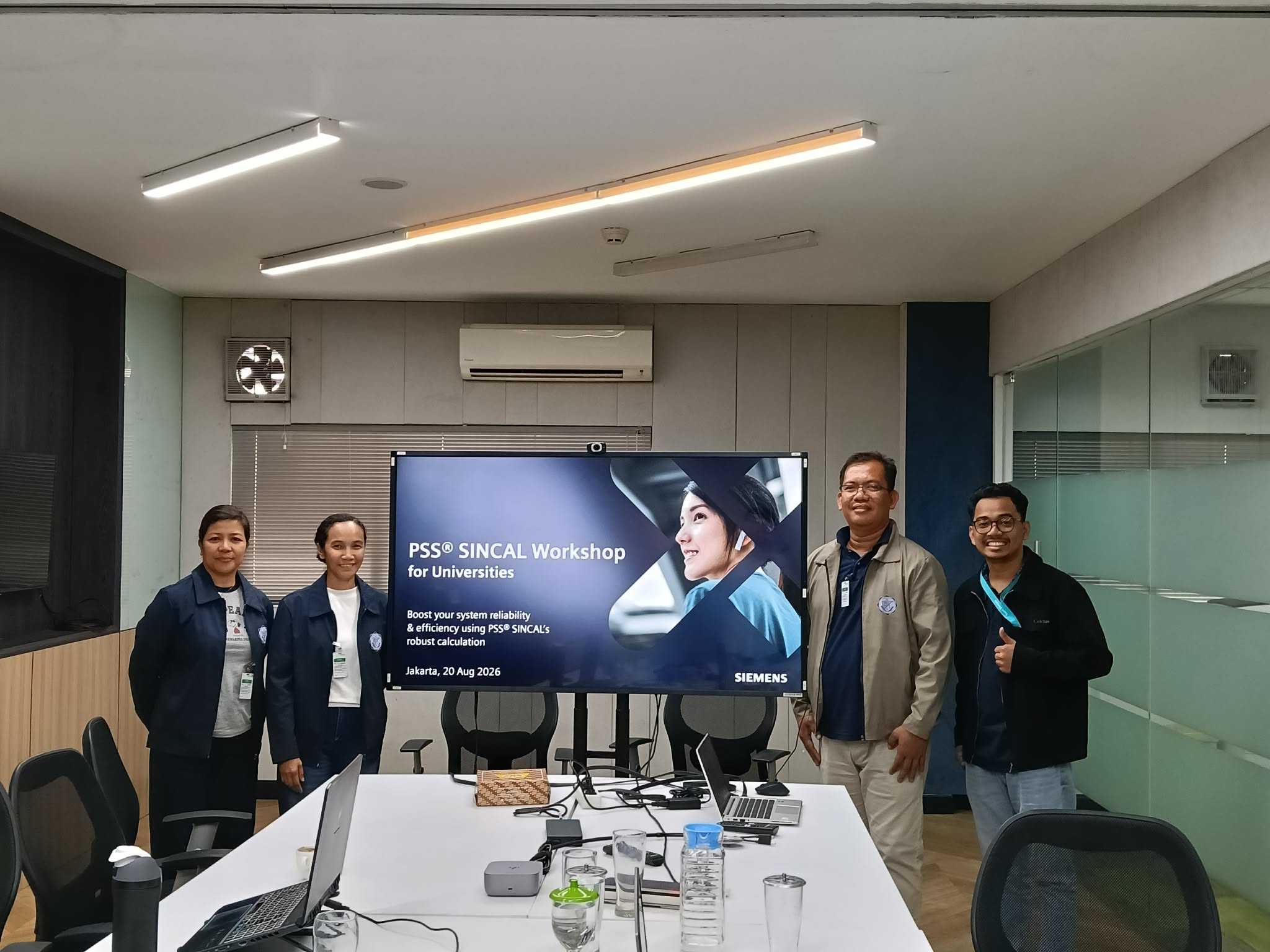
The training covered four major objectives: developing foundational knowledge of the software, mastering the workflow for creating and executing simulation studies, translating industrial software capabilities into laboratory exercises, and identifying opportunities to integrate PSS®SINCAL into core course activities.
Participants were also introduced to three key areas of competency: software fundamentals, simulation workflow, and academic integration. These areas provided faculty with a framework for connecting theoretical power system concepts with practical, software-based problem solving.
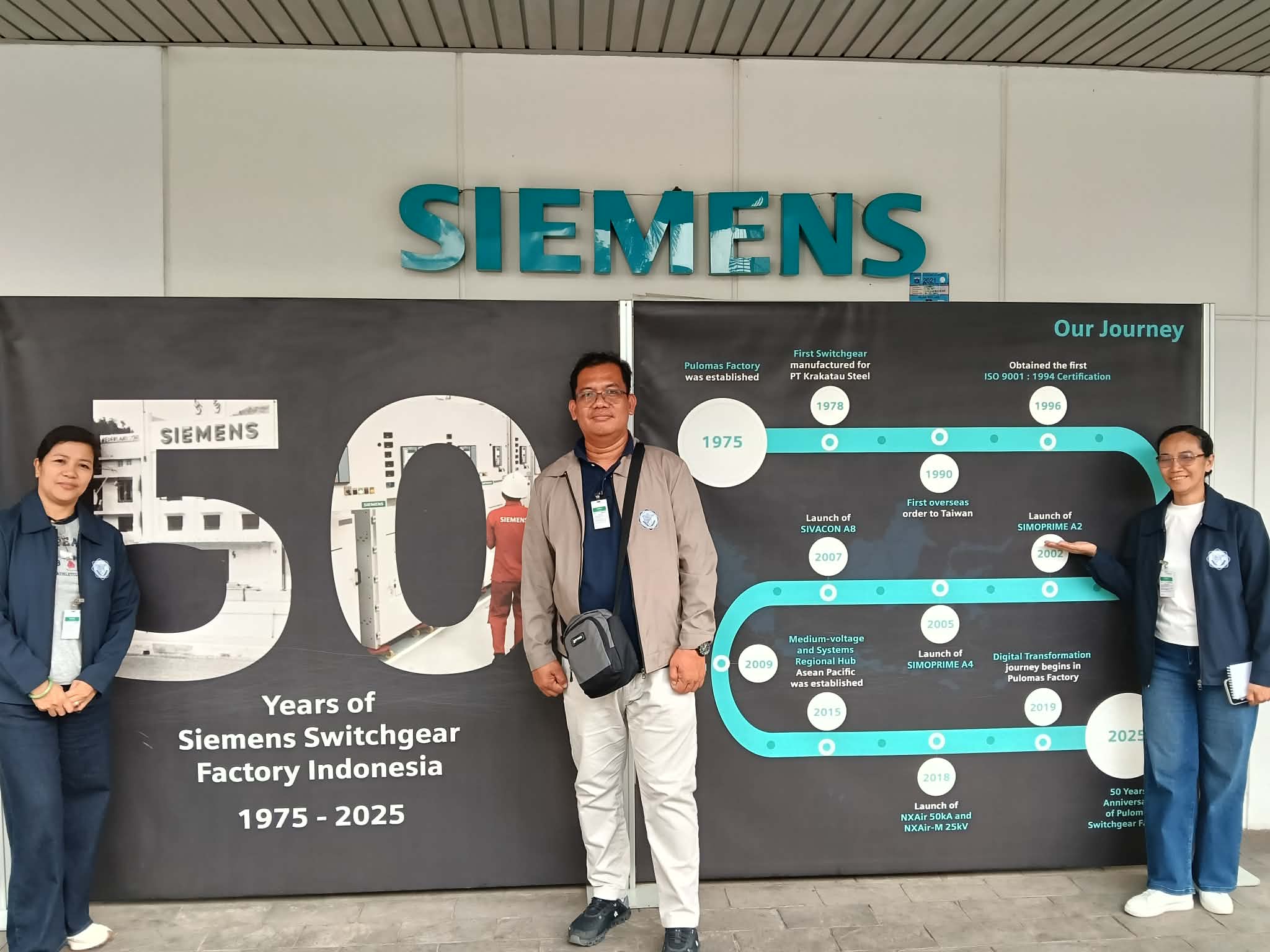
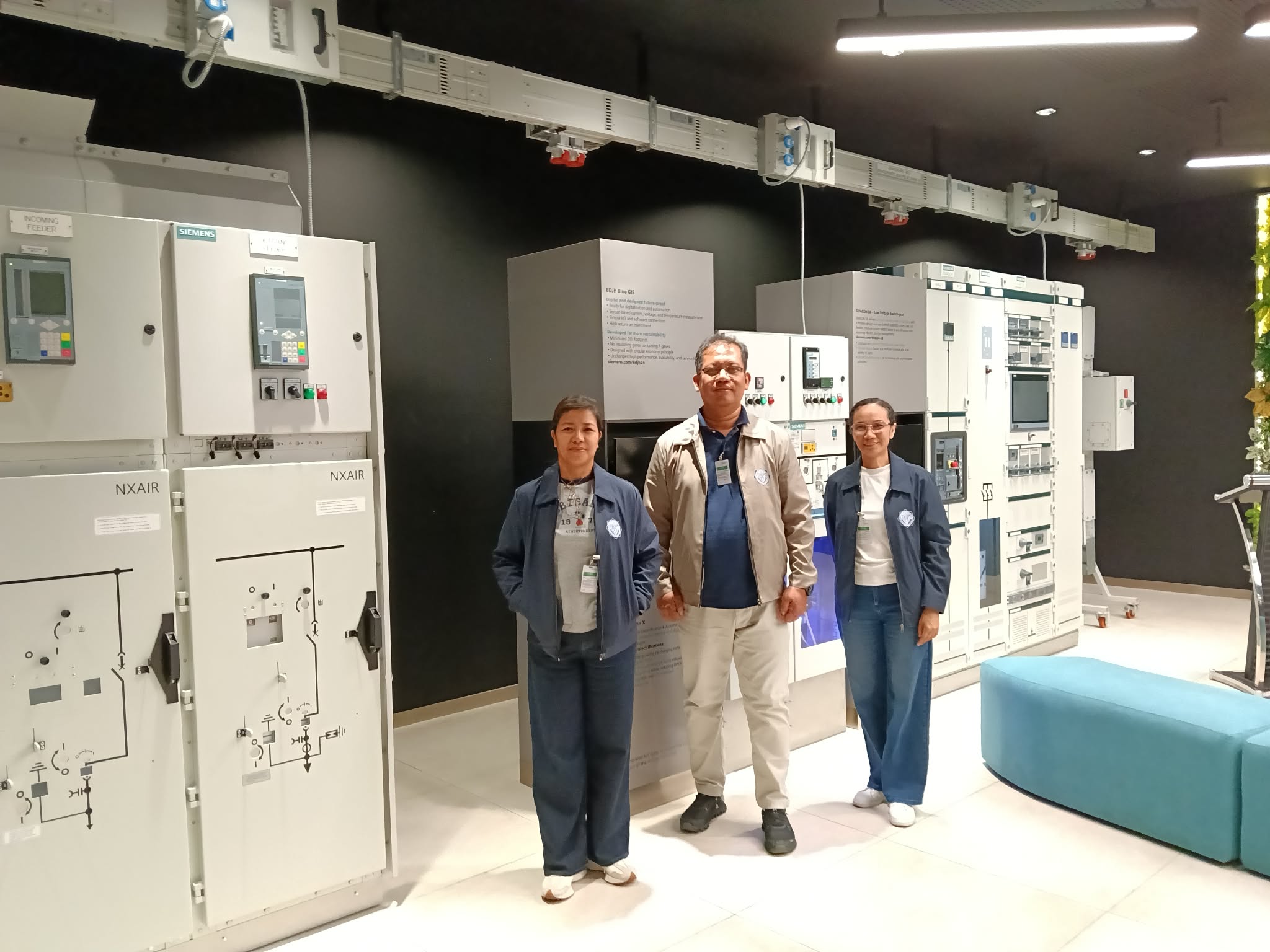
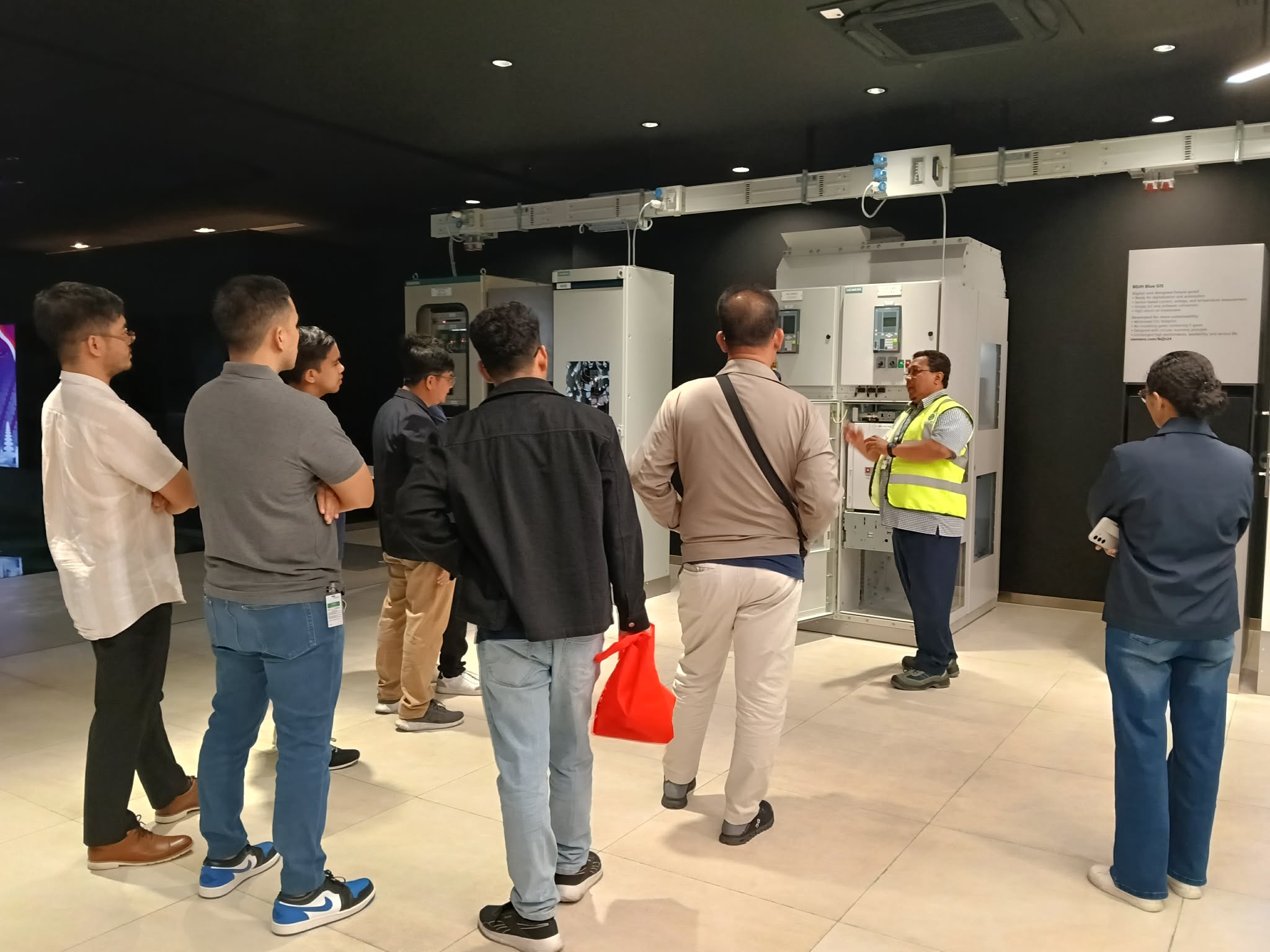
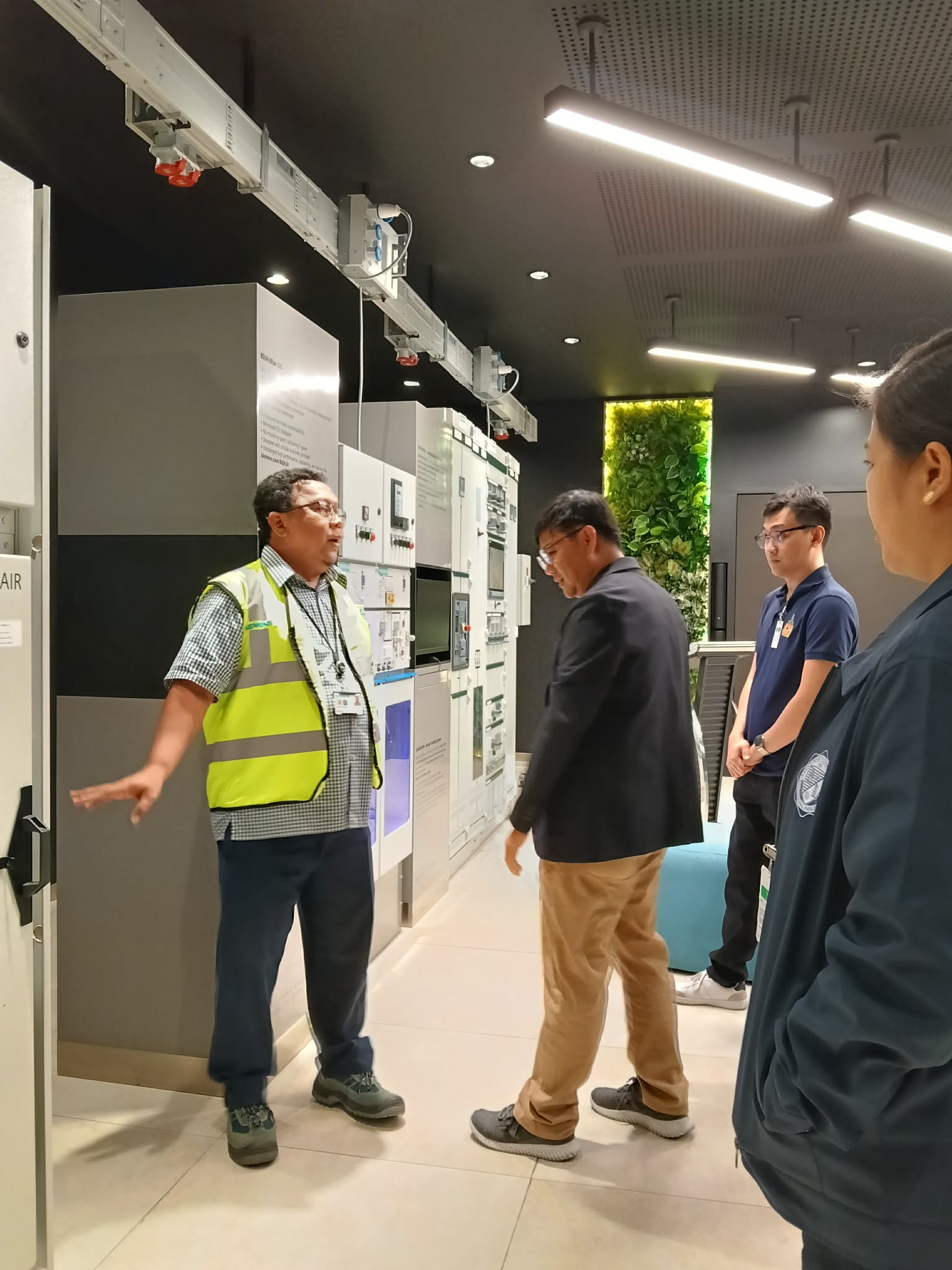
A critical component of the faculty visit was a comprehensive technical tour of the Siemens Indonesia production area. For educators, maintaining currency with industrial hardware is essential to providing a context-rich education. This tour allowed faculty to move beyond the screen and inspect the physical infrastructure that the PSS®SINCAL software is designed to simulate.
Technical exposure highlights included:
- Medium Voltage (MV) and High Voltage (HV) Switchgears: Inspection of construction and safety mechanisms.
- Advanced Distribution Relays: Review of protection and control hardware.
- Electrical Distribution Products: Exposure to the diverse Siemens portfolio used in global power grids.
The strategic value of this immersion lies in the “physical-to-digital” context it provides. By observing the physical dimensions and mechanical constraints of MV/HV switchgears, faculty can better guide students in correlating physical equipment specifications with digital model parameters. This ensures that the simulations conducted in the university laboratory are grounded in the tangible realities of the power industry.
The knowledge gained from the seminar directly supported SEAIT’s laboratory development initiatives, particularly the planned use of the 25-user PSS®SINCAL license. The software is expected to enhance courses such as Power System Analysis and Distribution and Substation Design, helping students bridge theoretical concepts with practical simulation-based applications.
To ensure the sustainable implementation of the software, the seminar identified several strategic actions, including conducting internal knowledge-transfer sessions for faculty and laboratory personnel, developing sample simulation projects aligned with course requirements, and preparing standardized laboratory manuals to maximize the use of the 25-user license.
The participation of SEAIT representatives in the Siemens Indonesia PSS®SINCAL Seminar marked an important step toward strengthening the University’s engineering laboratory resources and advancing simulation-based education. More importantly, the experience demonstrated Saint Mary’s University’s continued commitment to developing industry-ready graduates equipped with relevant technical competencies for the modern engineering landscape.
SDG 4: Quality Education
SDG 9: Industry, Innovation and Infrastructure
SDG 17: Partnerships for the Goals
Written by: Engr. . Jojo C. Mariano and Ms. Krby Zyryll G. Perez
Photo by: Mrs. Elizabeth F. Ramos