
University Research Ethics Board
VISION
SMUREB envisions to be a premier research ethics unit that champions scientific integrity, protects participants, and advances transformative, socially beneficial knowledge.
MISSION
To cultivate a culture of research integrity by enforcing national and international ethical standards through rigorous review, strong governance, and continuous capacity-building.
BRIEF BACKGROUND
The establishment of the University Research Ethics Board (UREB) was formally approved by the University President on October 1, 2020, with the appointment of seven founding members. Shortly thereafter, on October 5, 2020, the governing Policy Statement was submitted to the Research and Community Development Council (RCDC) for review and was endorsed by its Chair and the University Research Center, affirming UREB’s autonomy in ethical review decisions. The university committed to supporting UREB by providing funding and administrative resources, including a dedicated office, administrative staff, and honoraria for reviewers. Subsequently, in August 2021, a memorandum mandated that all university research, including academic, community-initiated, policy-related, and socio-cultural studies, must undergo ethics review by UREB.
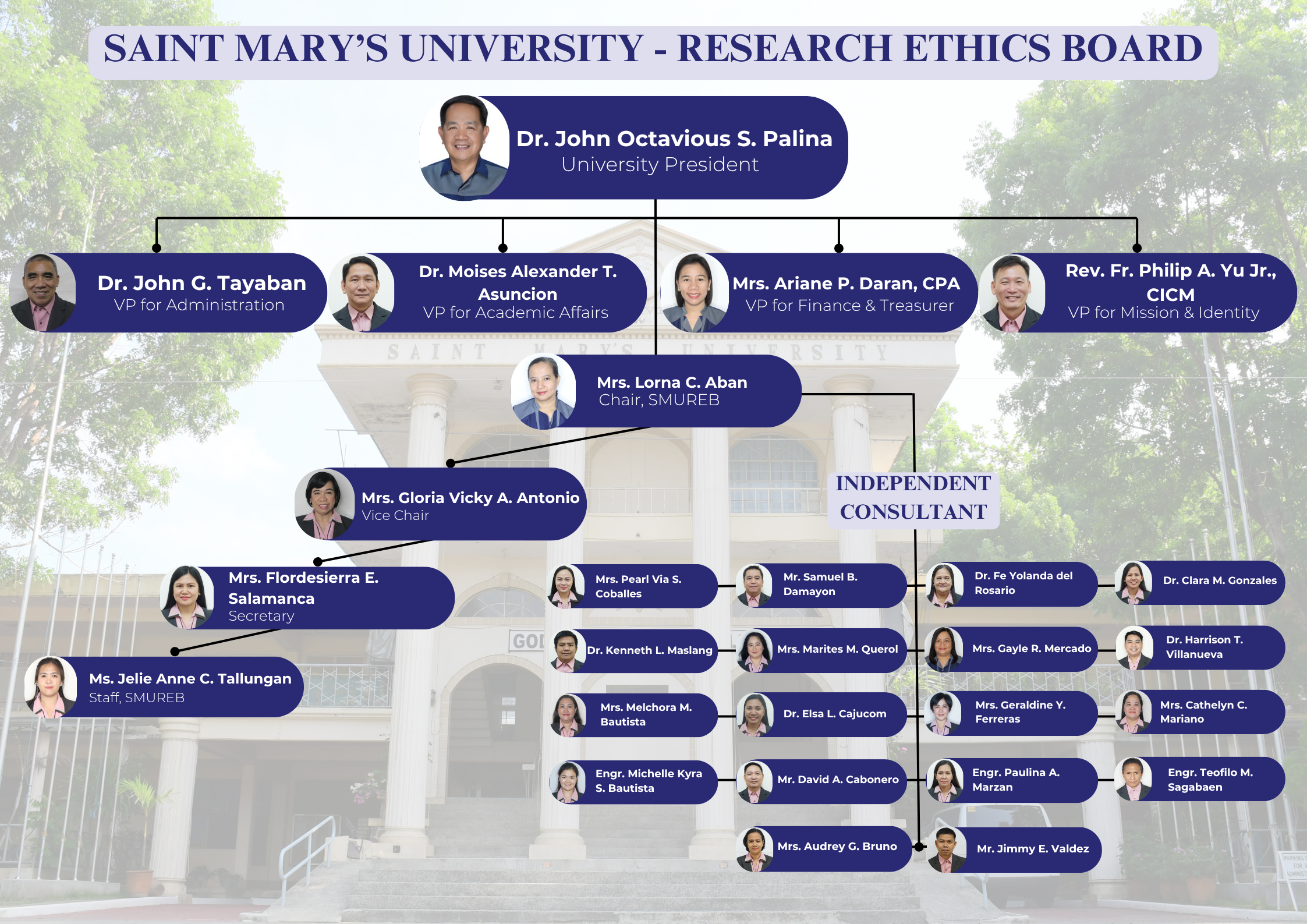
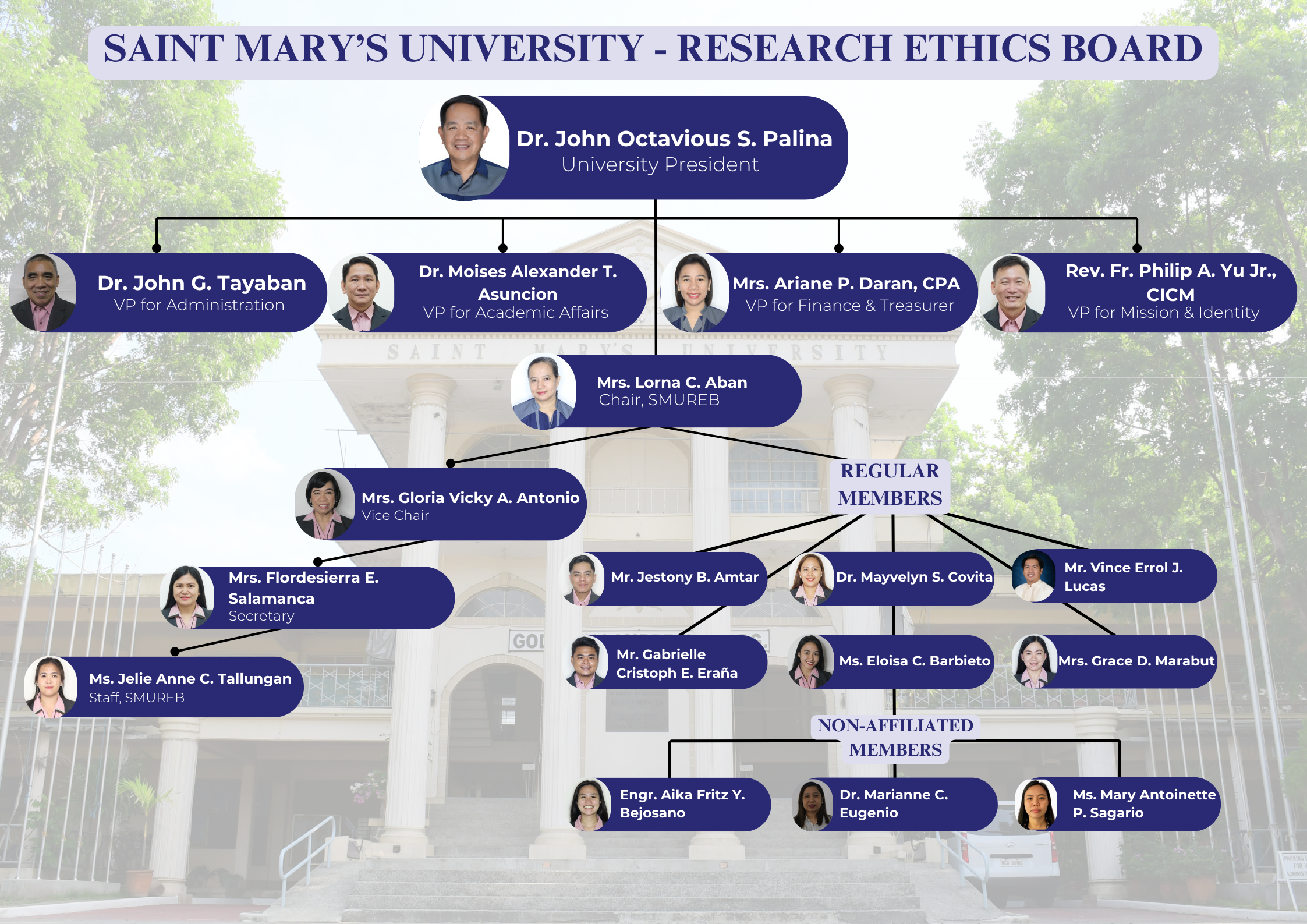
By November 2020, following confirmation by the Board of Trustees and consultation with the Advisory Board, Mr. Jason Arnold L. Maslang was appointed as UREB chairperson. In early 2021, members participated in Basic Research Ethics Training sponsored by the Department of Science and Technology–Philippine Health Research Ethics Board, with additional training sessions and webinars conducted throughout 2021 and 2022 to enhance ethical awareness across the university community. These initiatives have expanded the pool of regular reviewers and independent consultants. The roster of the initial group of primary reviewers and alternate members, the pioneers of the ethics board, is documented in the historical narrative of the University Research Ethics Board (SOP Manual 2021).
SMUREB’s operations are formally governed by Standard Operating Procedures (SOP) that affirms its independence and protects its ethical decisions from external influence through policy safeguards. The SOPs are designed to be adaptable, allowing for amendments as needed and aligning with the current national and international ethical standards, with clear procedures for revising guidelines. Membership changes are managed through established protocols to ensure smooth transitions following the departure and appointment of members. The commitment of SMUREB members to ethical research is profoundly inspired by the institution’s Marian mission and is propelled by a pursuit of excellence.
FUNCTIONAL STRUCTURE
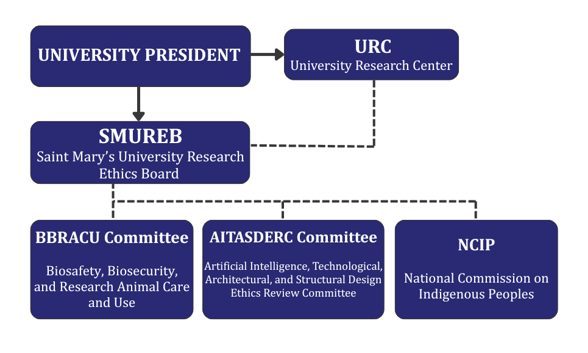
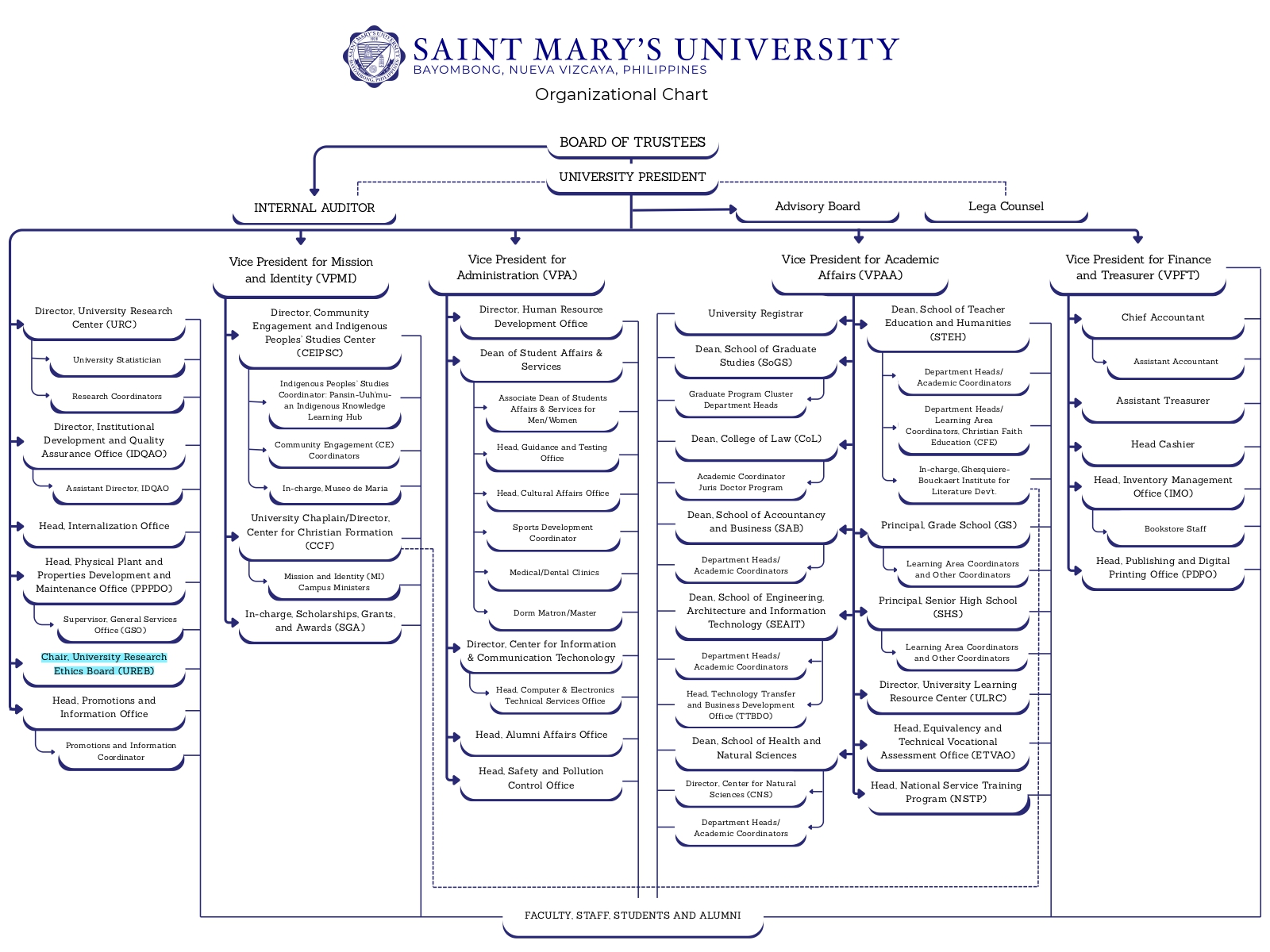
The University Research Ethics Board operates under the direct supervision of the Office of the University President. While it shares certain functions with the University Research Center (URC) in facilitating undergraduate research, UREB’s primary focus is on upholding ethical standards in research. Its scope extends beyond undergraduate research to include other stakeholders such as basic education institutions, graduate schools, faculty researchers, as well as institutional researchers.
The Saint Mary’s University Research Ethics Board (SMUREB), a research ethics committee, is responsible for the ethical review of research protocols. It maintains full independence in its decision-making processes regarding the evaluation of research protocols. Research studies submitted to SMUREB that do not involve human participants or human data are first referred to other relevant review committees before ethics approval is granted. These committees include the Biosafety Biosecurity Animal Care and Use committee [covering the Institutional Biosafety Committee (IBC) for research involving hazardous waste or pathogenic organisms, the Institutional Animal Care and Use Committee (IACUC) for studies involving laboratory animals], and the Artificial Intelligence, Technology, and Structural Design Ethics Review Committee (AITASDERC) for those involving artificial intelligence and designs. Additionally, research involving indigenous peoples is carefully reviewed, with ethics approval pending the submission of a certification from the National Commission on Indigenous Peoples (NCIP) by the research proponents.
Links:
- Standard Operating Procedures
- UREB Guidelines
Contact Details:
Second Floor, Fr. John Van Bauwel Building
SMU Main Campus,
Ponce Street,
Don Mariano Marcos Bayombong,
3700 Nueva Vizcaya, Philippines
www.smu.edu.ph | reb@smu.edu.ph (078) 321-2221 ǀ 09177053041