SMU BSIT Students Complete International Practicum at ITS Surabaya, Indonesia
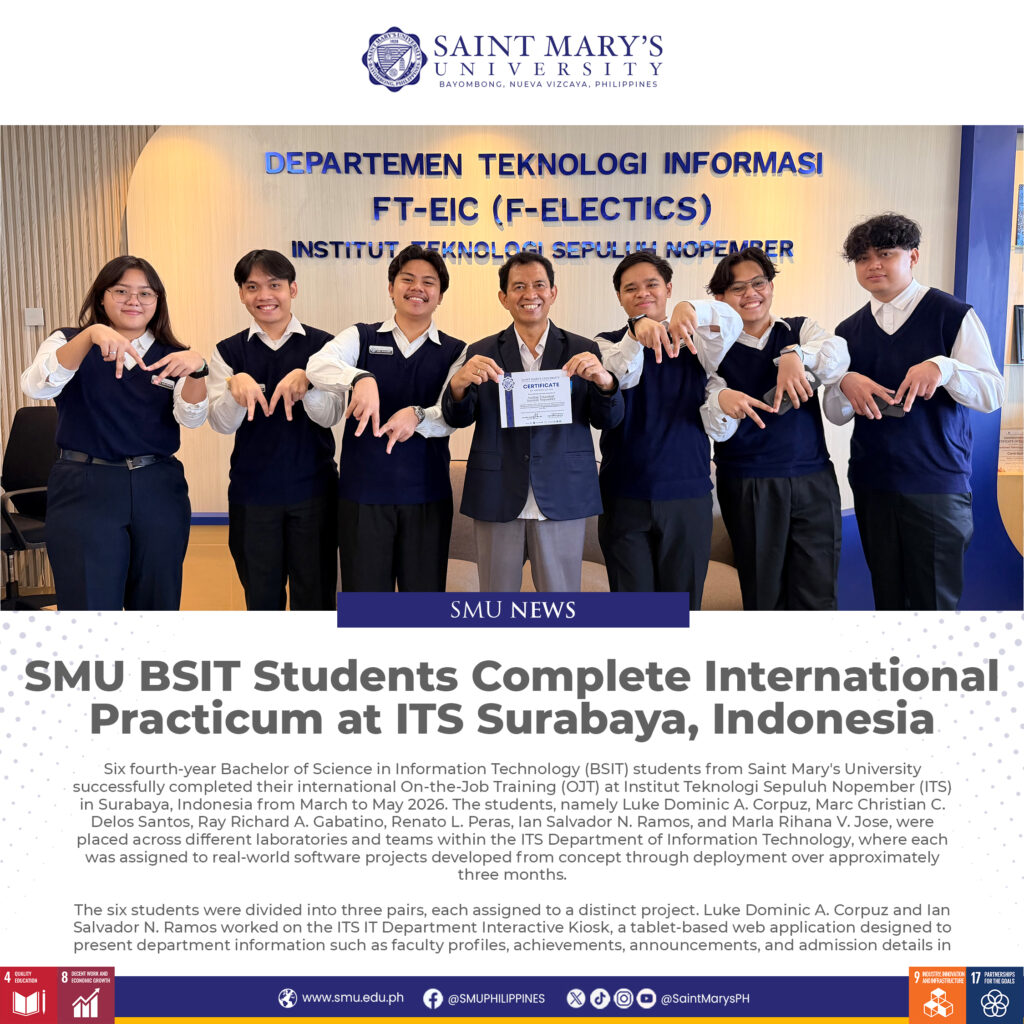
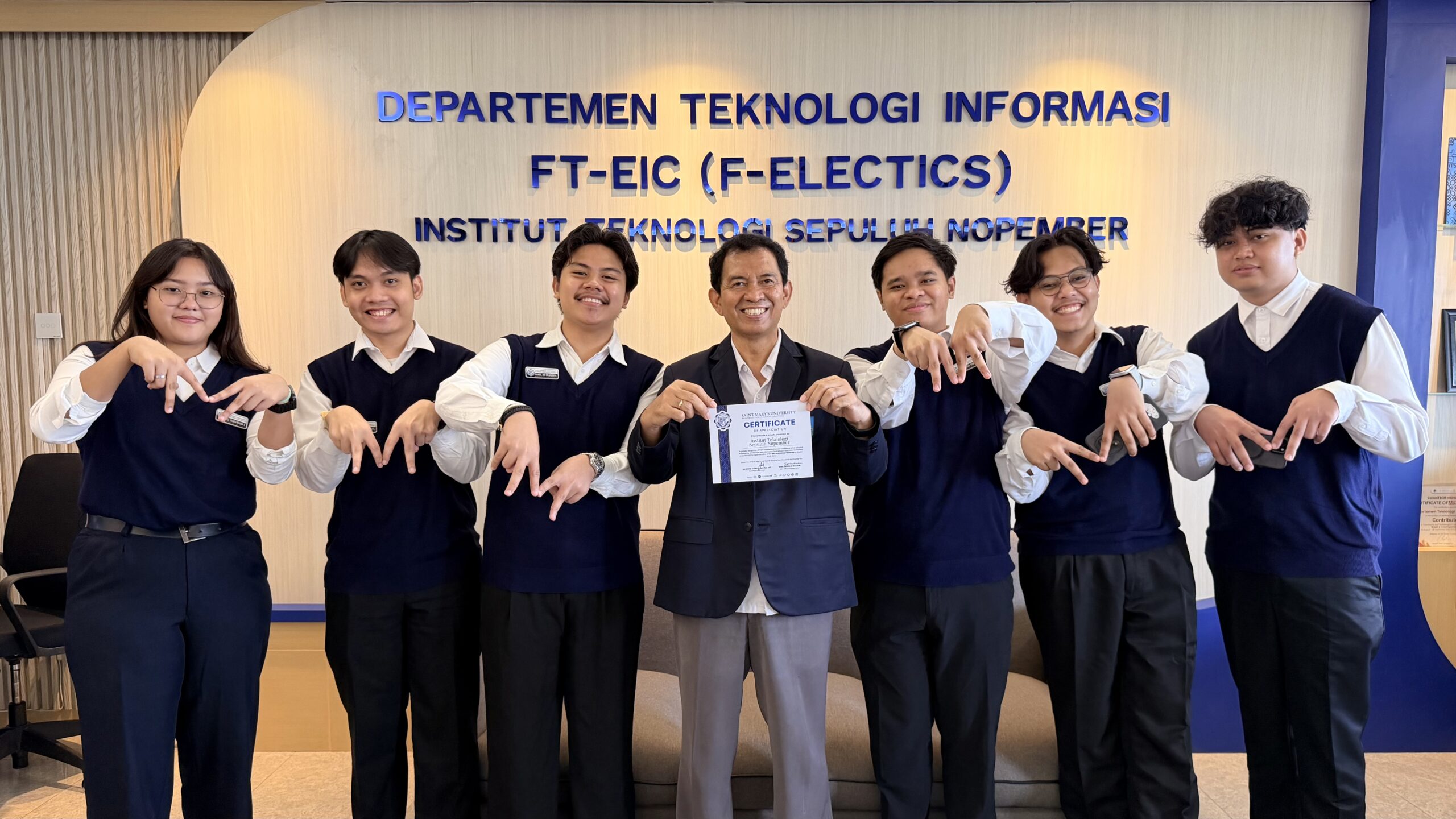
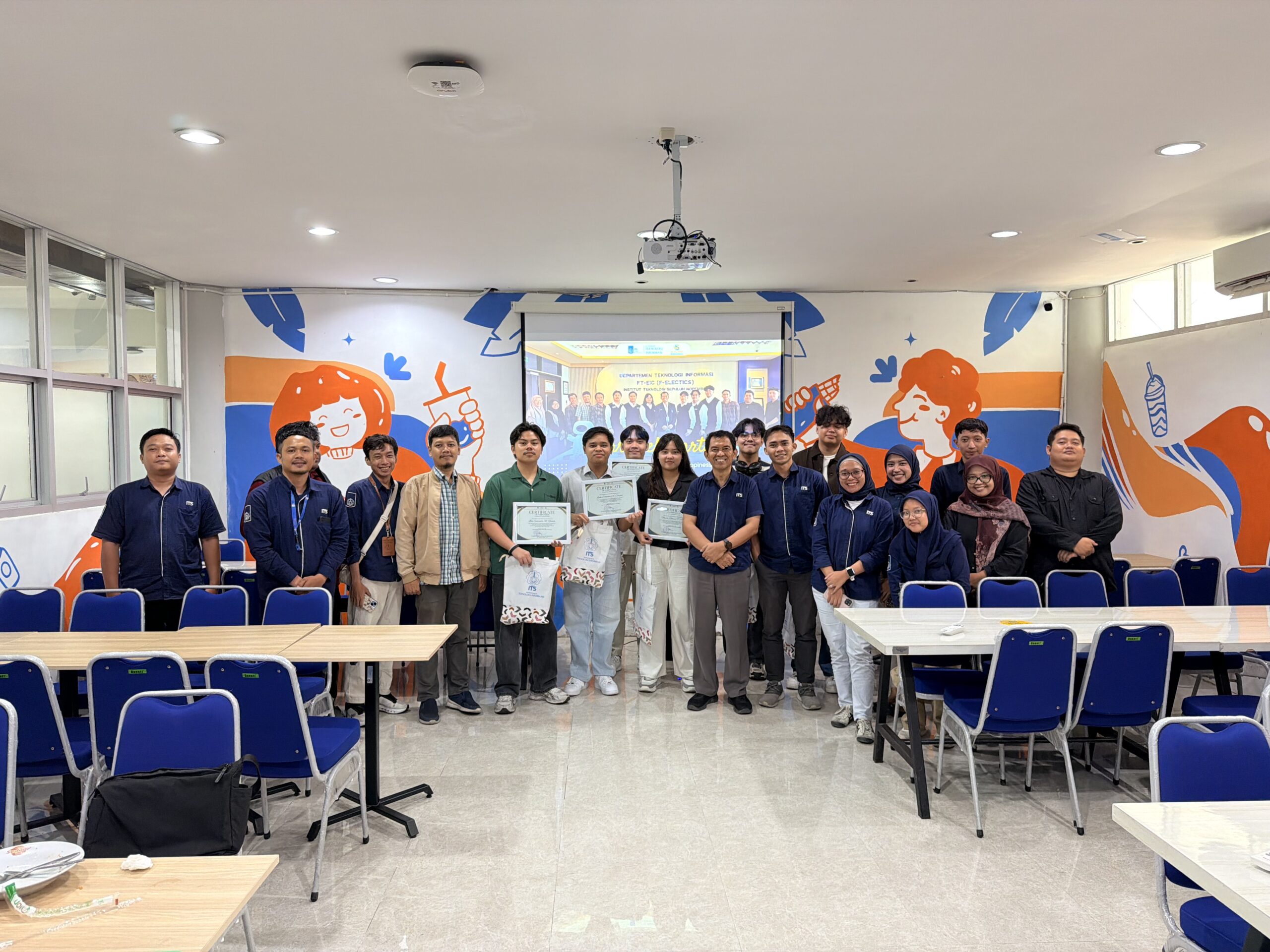
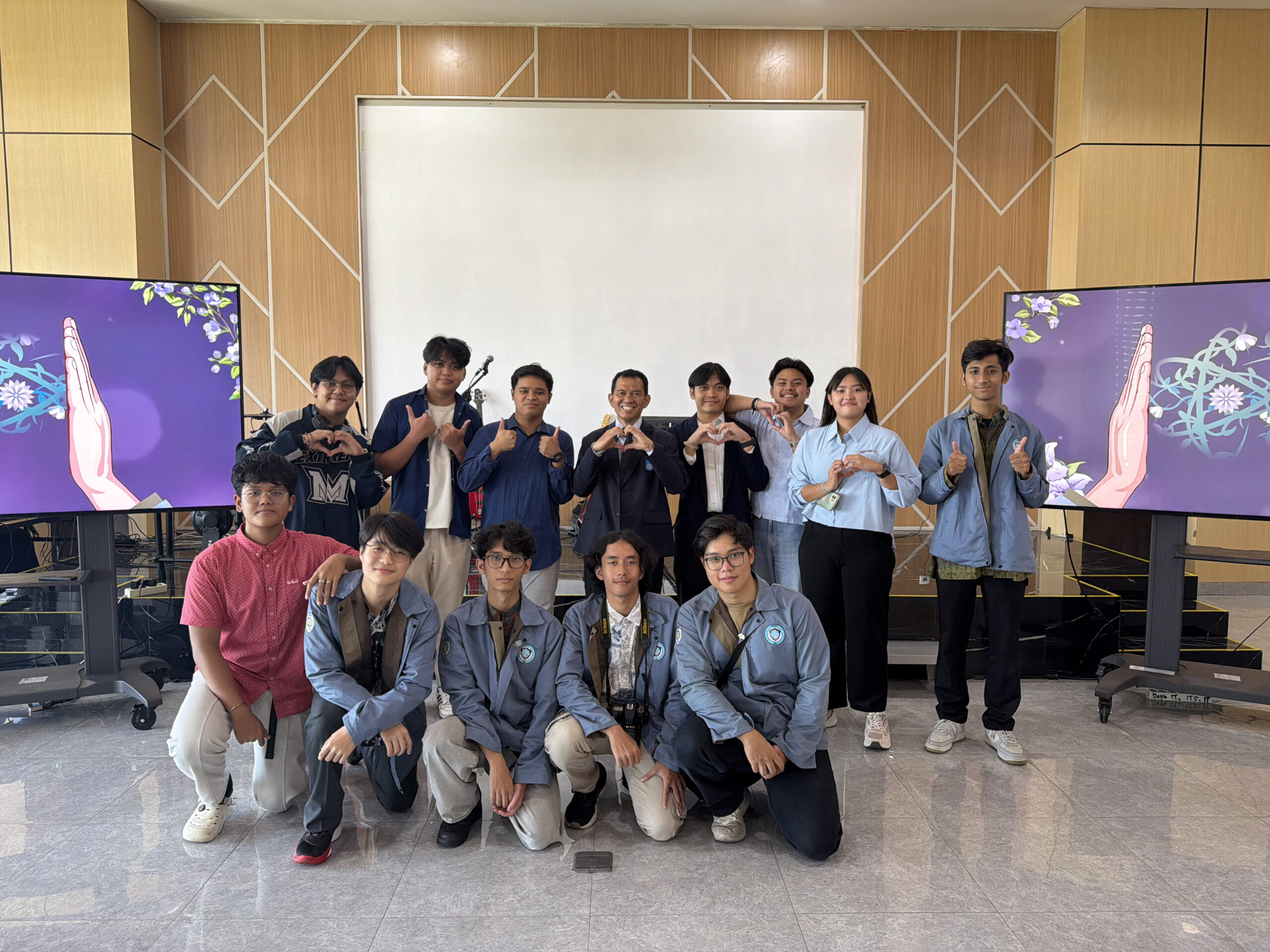
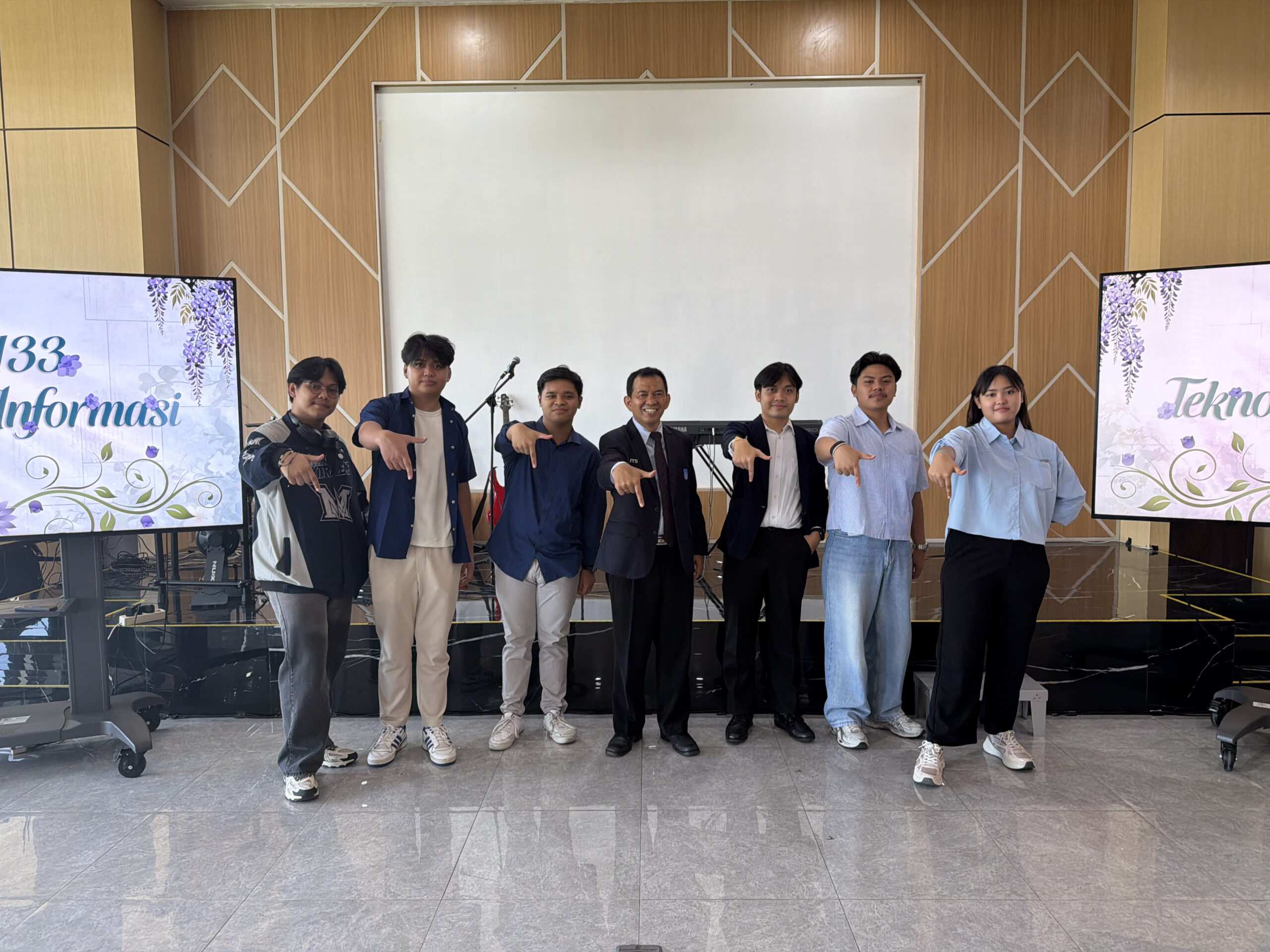
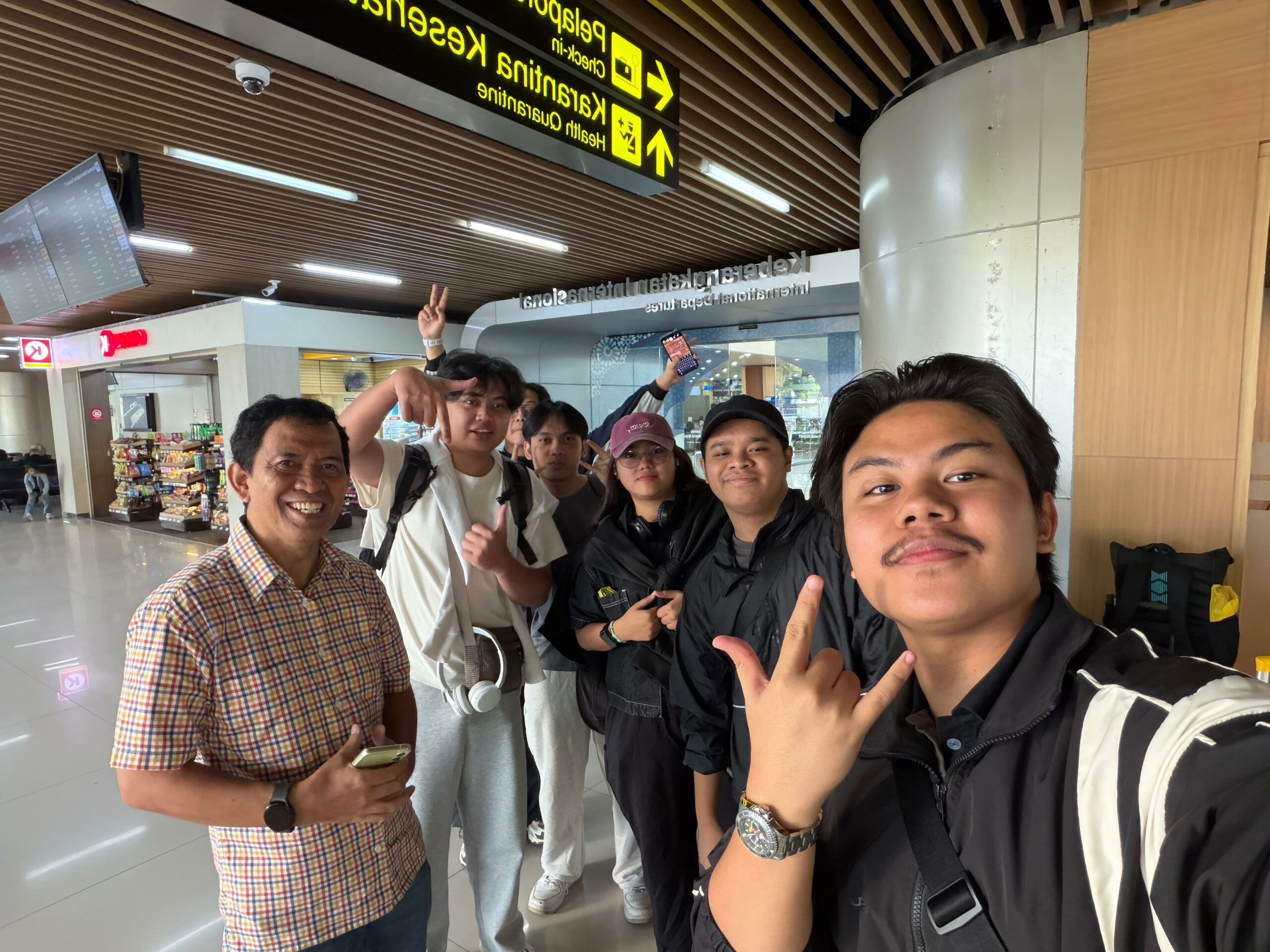
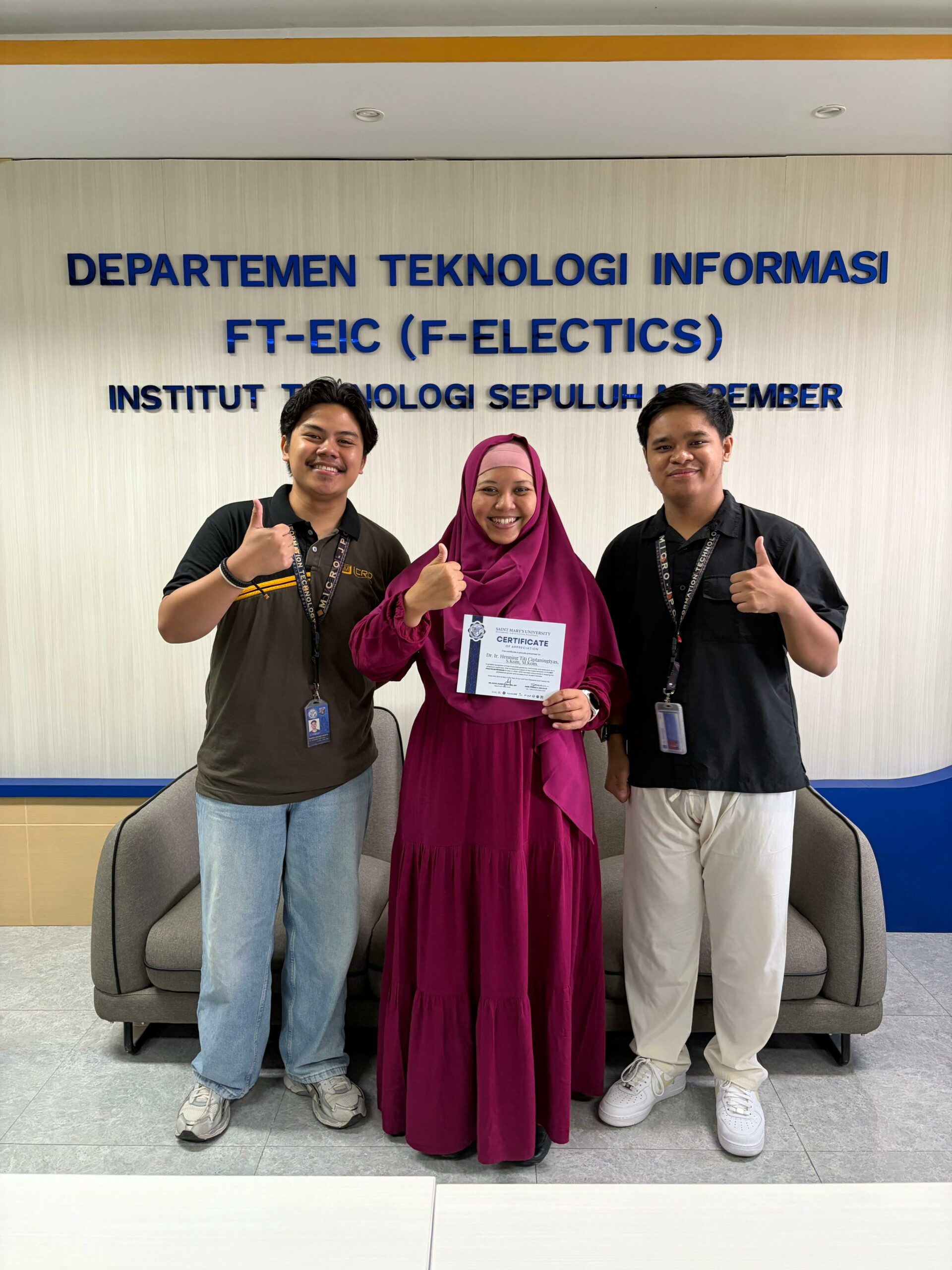
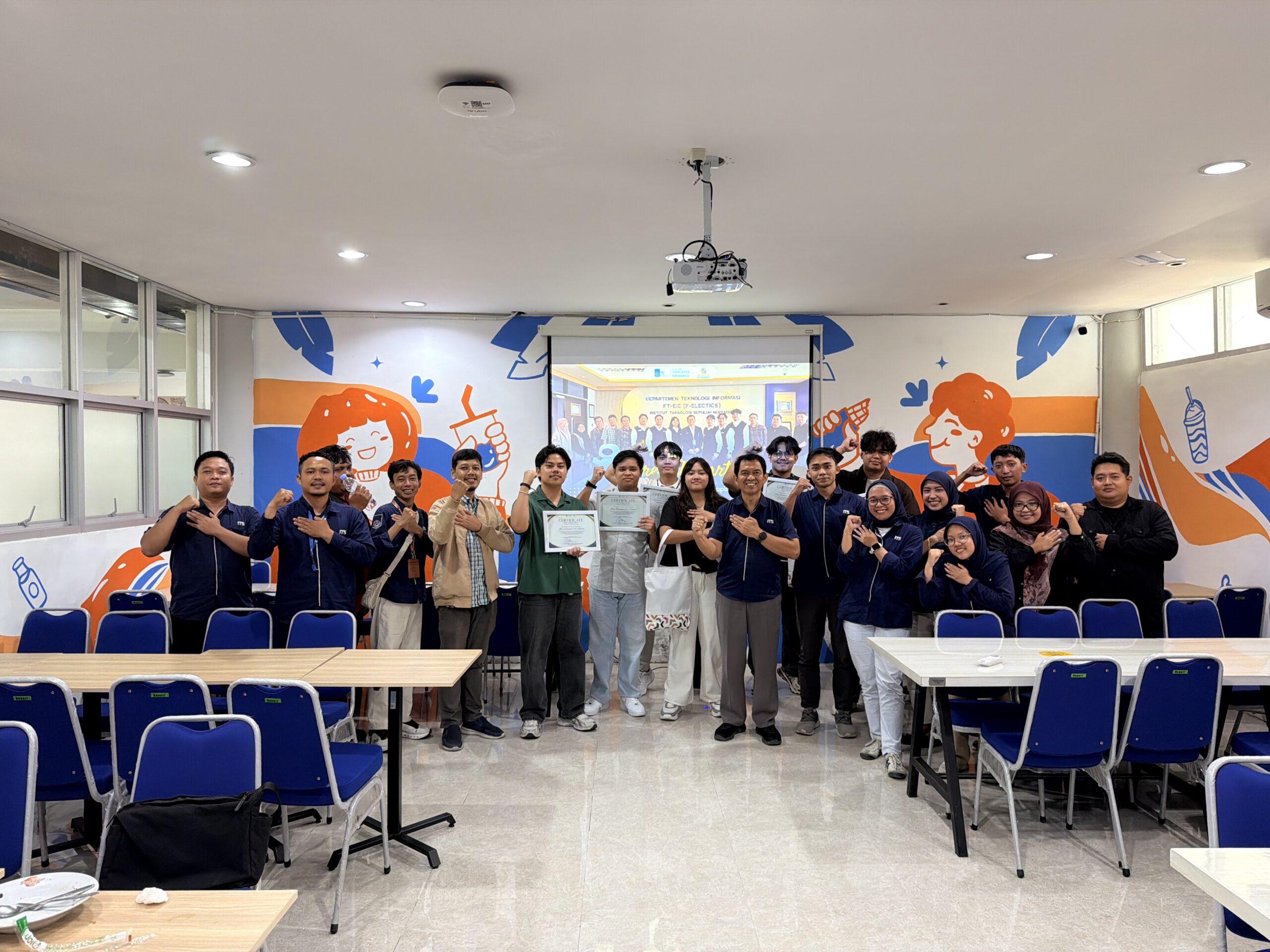
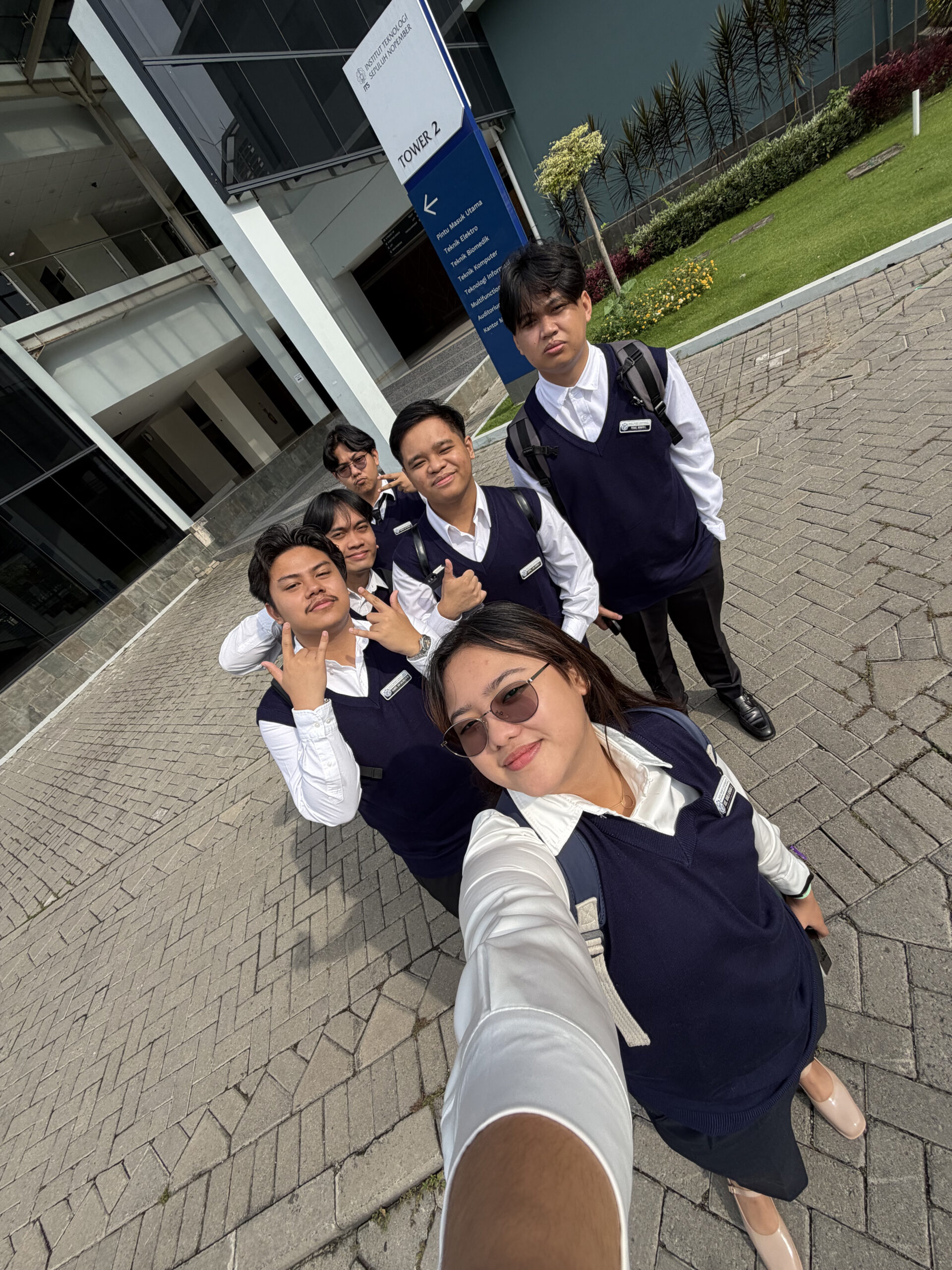
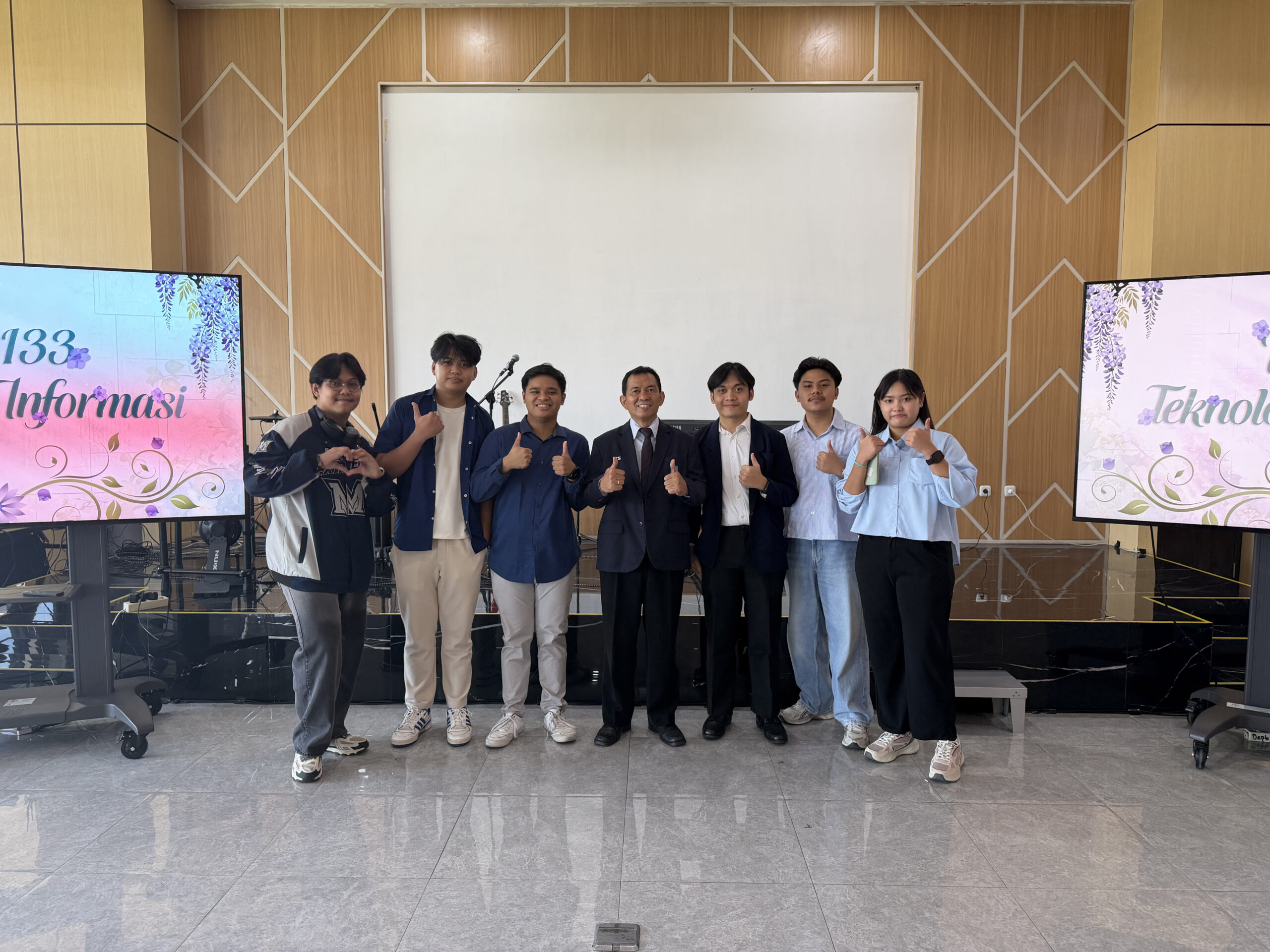
Six fourth-year Bachelor of Science in Information Technology (BSIT) students from Saint Mary’s University successfully completed their international On-the-Job Training (OJT) at Institut Teknologi Sepuluh Nopember (ITS) in Surabaya, Indonesia from March to May 2026. The students, namely Luke Dominic A. Corpuz, Marc Christian C. Delos Santos, Ray Richard A. Gabatino, Renato L. Peras, Ian Salvador N. Ramos, and Marla Rihana V. Jose, were placed across different laboratories and teams within the ITS Department of Information Technology, where each was assigned to real-world software projects developed from concept through deployment over approximately three months.
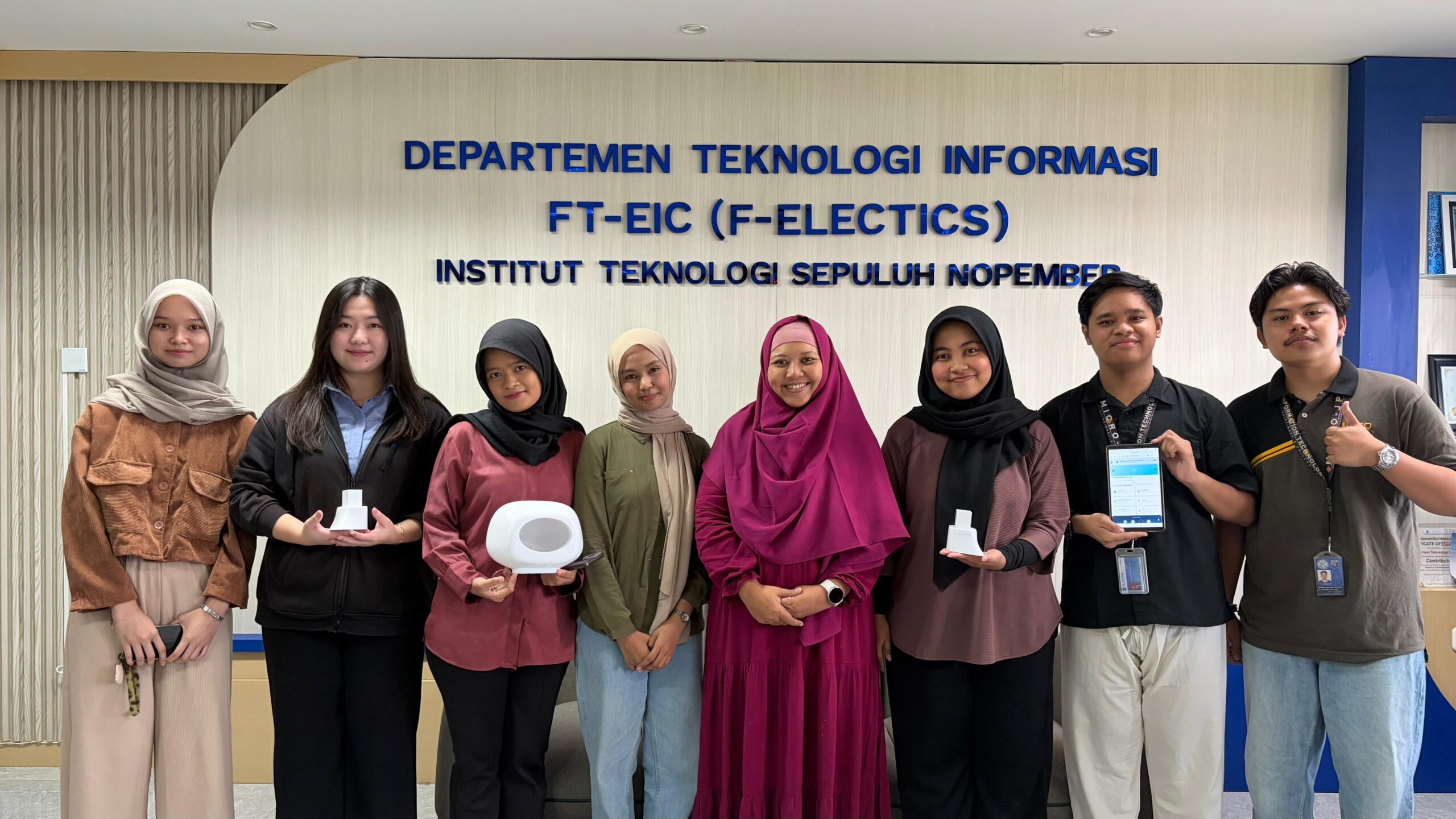
The six students were divided into three pairs, each assigned to a distinct project. Luke Dominic A. Corpuz and Ian Salvador N. Ramos worked on the ITS IT Department Interactive Kiosk, a tablet-based web application designed to present department information such as faculty profiles, achievements, announcements, and admission details in an engaging and accessible way for students, visitors, and stakeholders. The system was built using React, Node.js/Express, and MongoDB, and featured a public-facing kiosk with eight interactive modules and a sixteen-module admin dashboard, complete with an AI chatbot, real-time notifications, JWT authentication, and Docker deployment on ITS university servers. Ian contributed to frontend development and UI/UX design, worked on responsive layout adjustments for the tablet’s portrait orientation, handled system documentation and user manuals, and participated in testing and deployment preparation. The project later expanded into a collaboration with an ITS capstone team developing an AI-powered robot called Reva, giving the pair firsthand experience coordinating their system with an external team’s technology in a real multi-project environment.
Marla Rihana V. Jose and Marc Christian C. Delos Santos developed Equimon, a Laboratory Inventory and Borrowing Management System designed to streamline how laboratory equipment is managed and borrowed at ITS. The system supported five distinct user roles and implemented a multi-step approval workflow requiring sign-off from lecturers, laboratory heads, and lab assistants before equipment could be officially borrowed. Marla handled the backend and systems architecture, implementing security features including Role-Based Access Control, JWT authentication, rate limiting, and protection against common web vulnerabilities, as well as real-time WebSocket notifications and a full internationalization layer for English and Bahasa Indonesia. Marc led the frontend, building the user interface in React using shadcn/ui and Ant Design, implementing dark and light mode theming across all views, integrating data visualization dashboards, and adding borrow-request reporting with PDF download functionality. The platform was deployed via Docker and Nginx within the ITS network infrastructure.
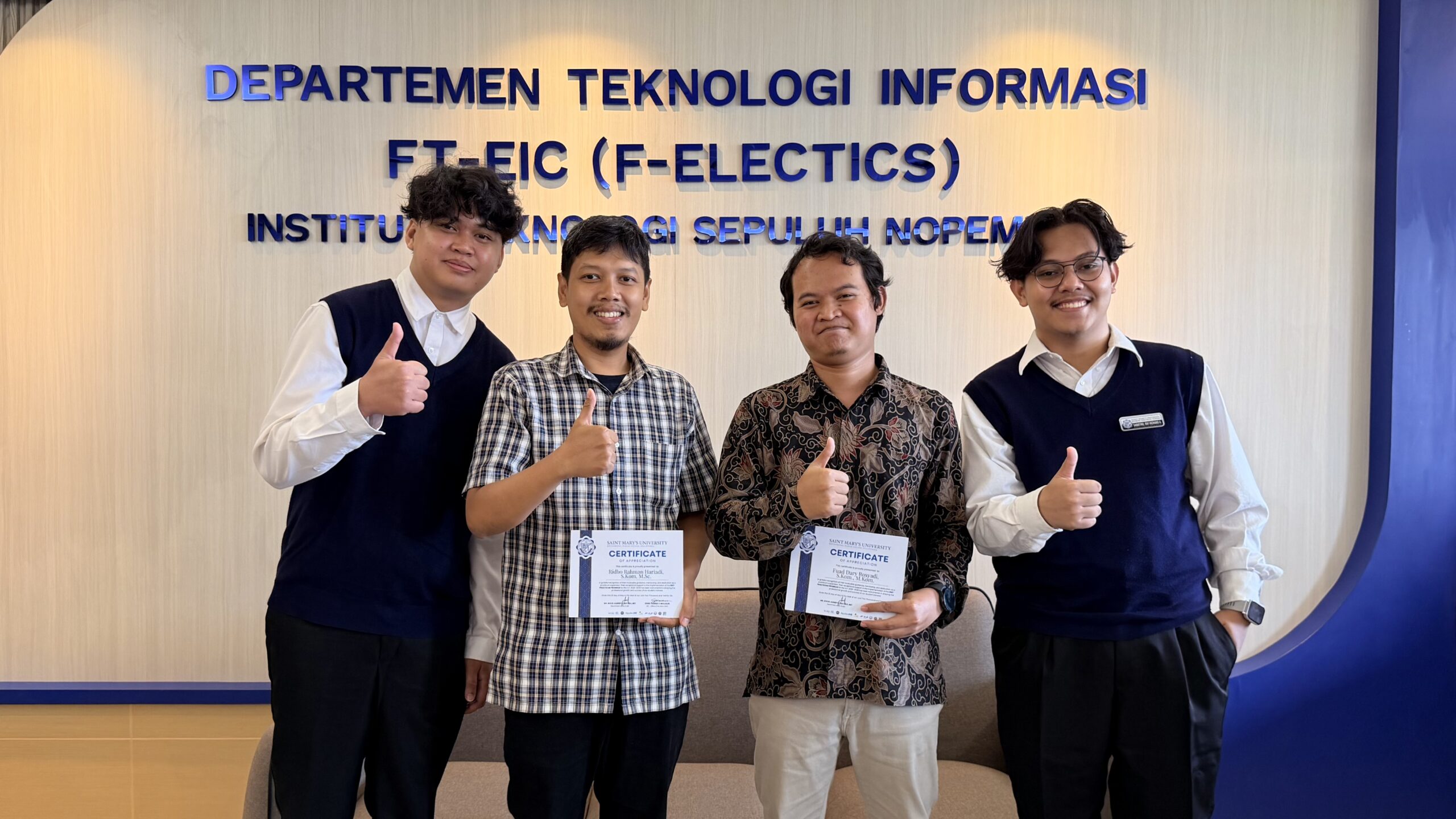
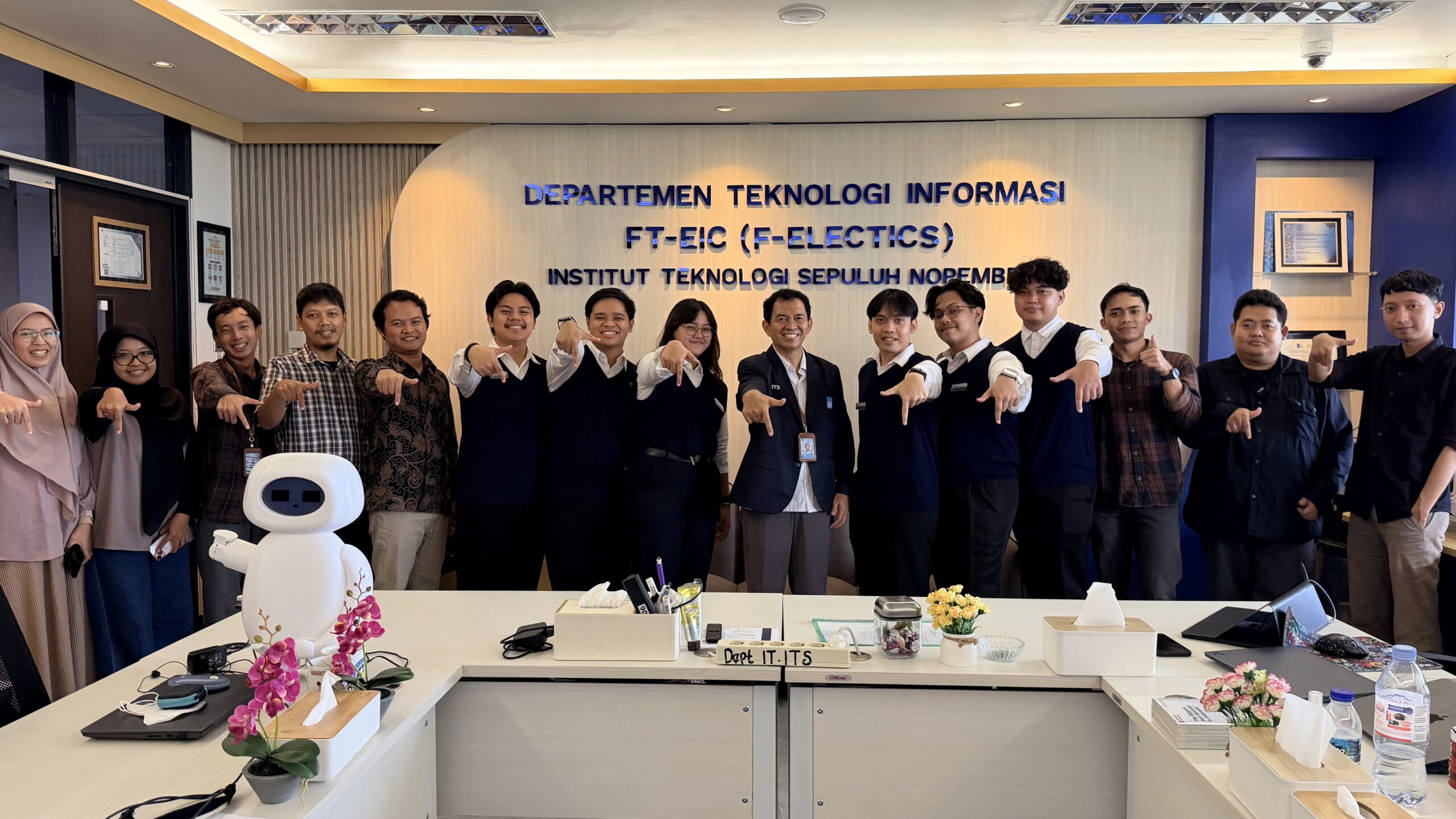
Ray Richard A. Gabatino and Renato L. Peras were assigned to the Smart City and Cybersecurity Laboratory, where they built Cyber Sentinel, an AI-powered web application security assessment platform combining an automated penetration testing engine with a Security Operations Center. Ray designed the penetration testing module, a modular scanning pipeline running twenty-two distinct scanning modules that integrated open-source tools such as Nmap, OWASP ZAP, and Nuclei alongside custom Python modules targeting SQL injection, XSS, IDOR, SSRF, and other OWASP Top 10 vulnerability classes. The platform enriched findings using the NIST National Vulnerability Database and FIRST.org EPSS API, and generated AI-written pentest reports through an LLM service supporting multiple providers including Anthropic Claude, Groq, OpenAI GPT-4, and Google Gemini. Renato built the SOC component around Wazuh as the core SIEM platform, writing custom threat detection rules and integrating MITRE ATT&CK framework mapping for all detected threats. The completed platform was formally demonstrated to the ITS faculty panel on May 19, 2026.
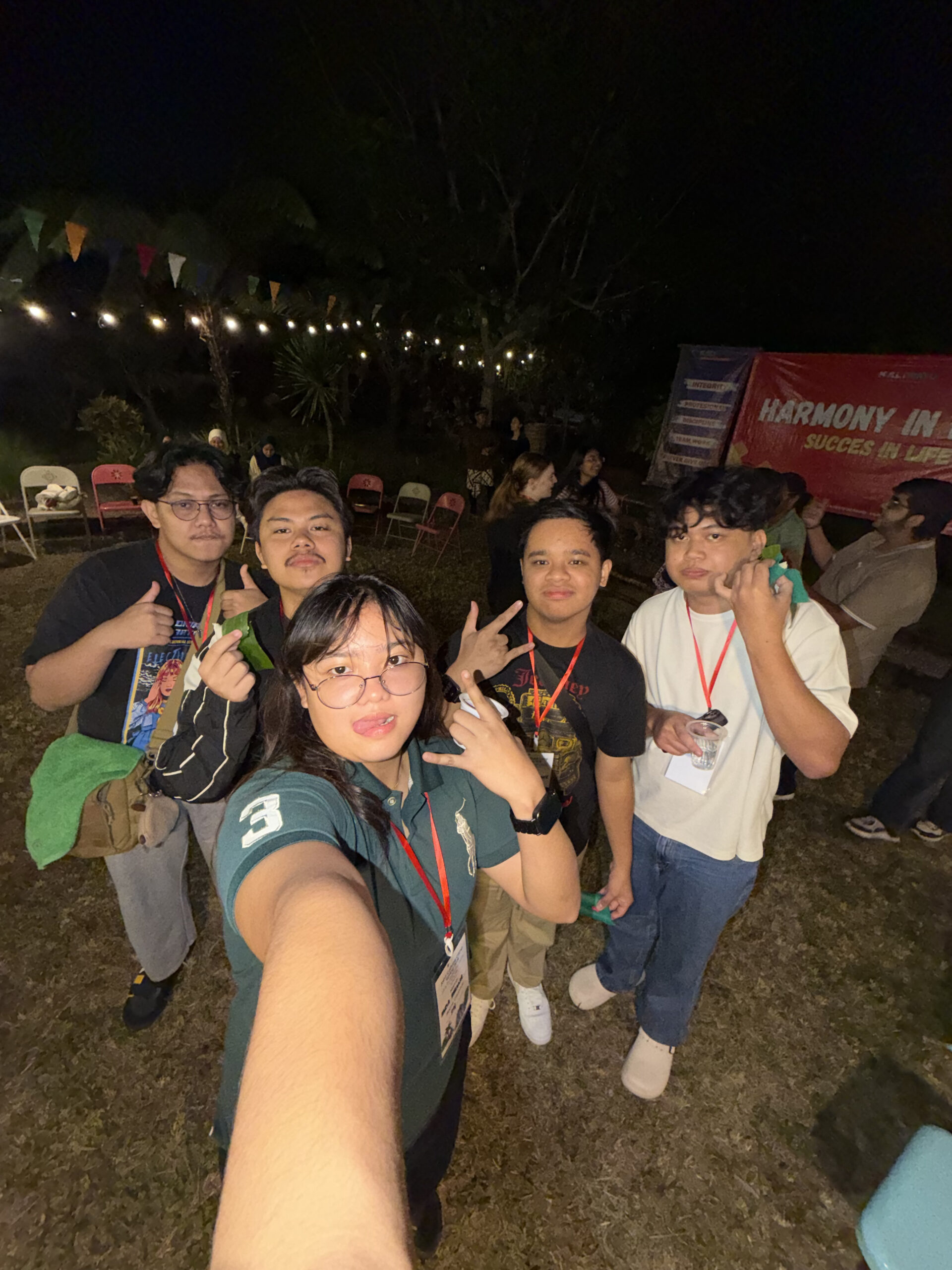
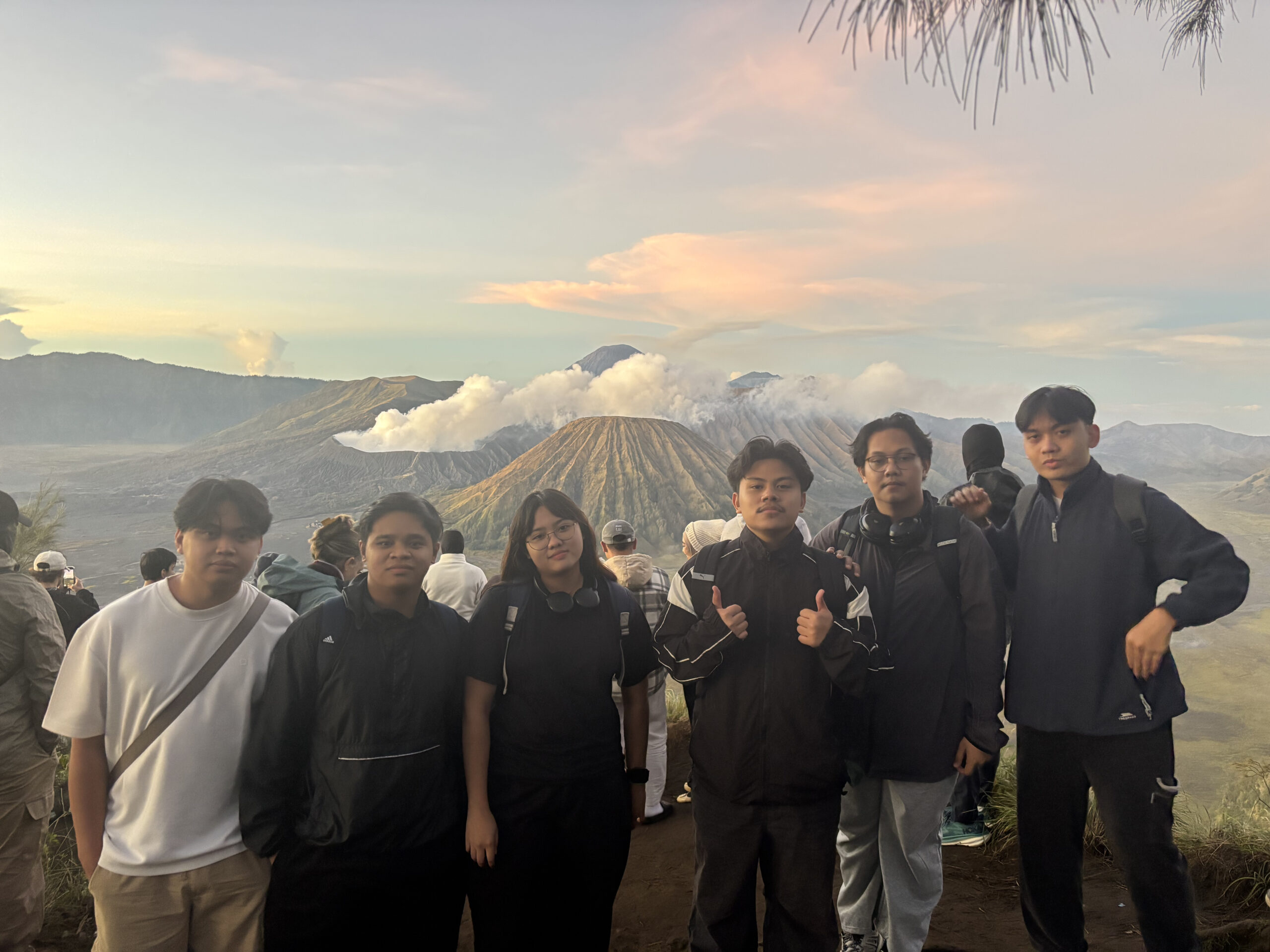
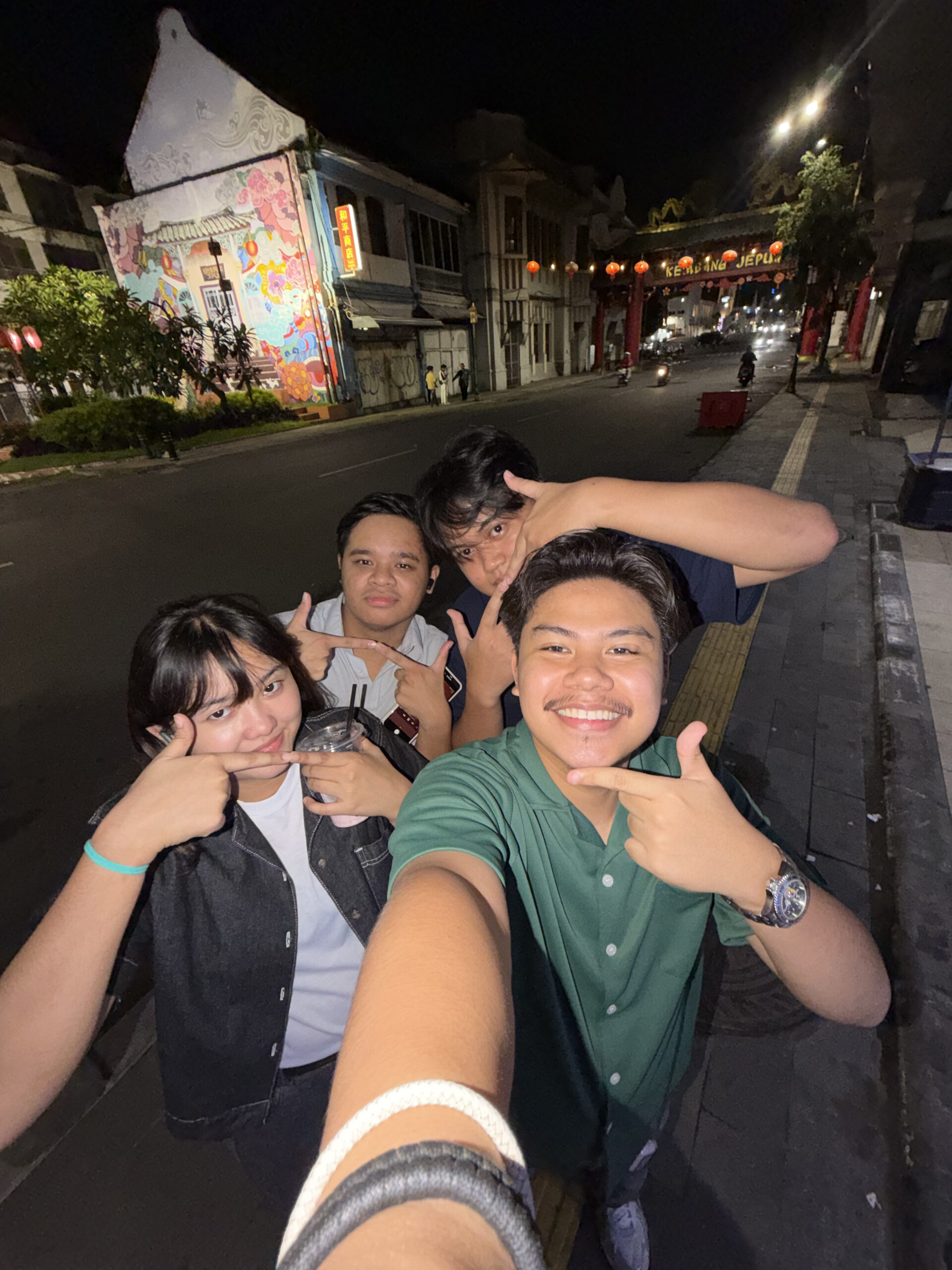
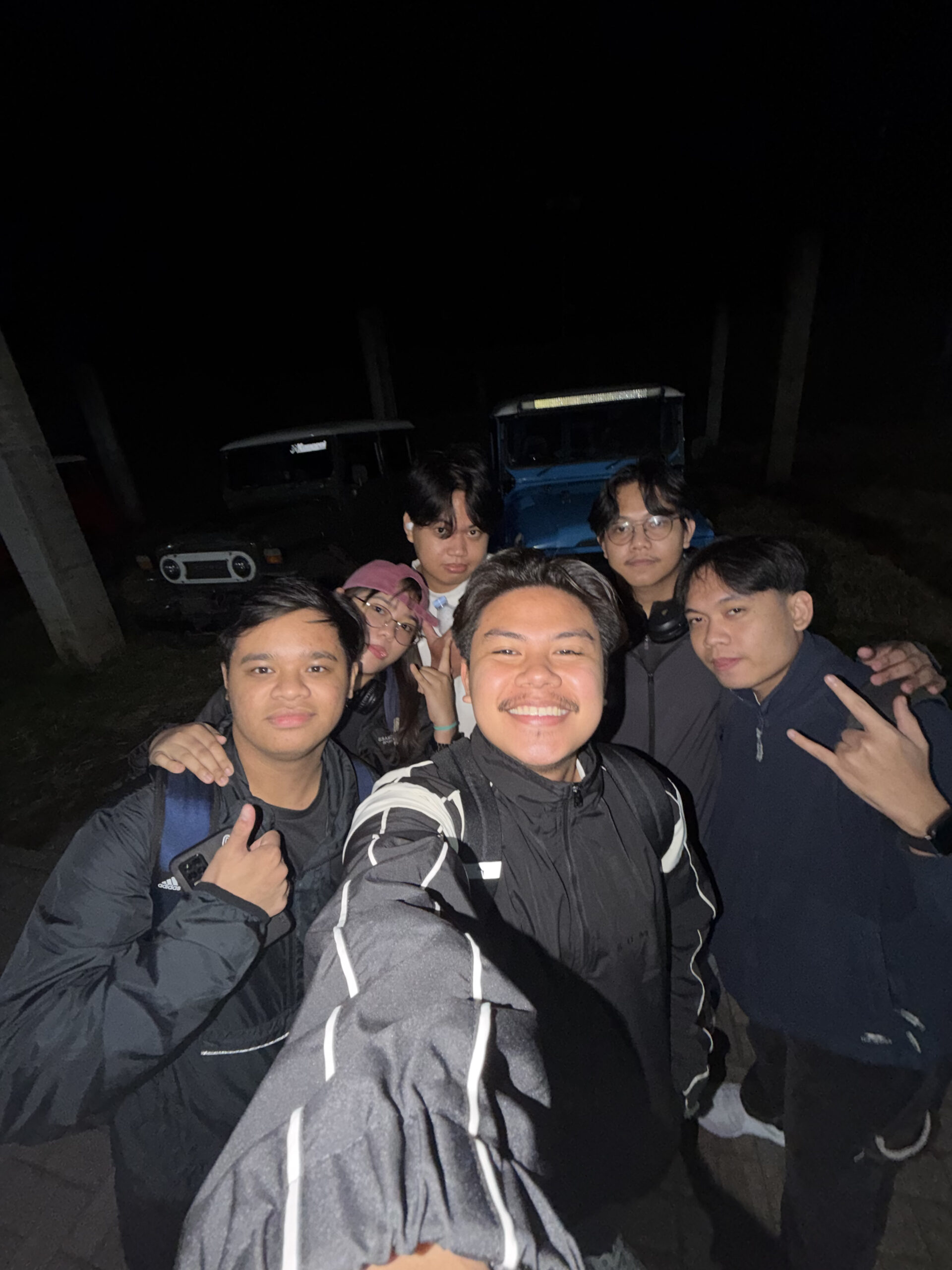
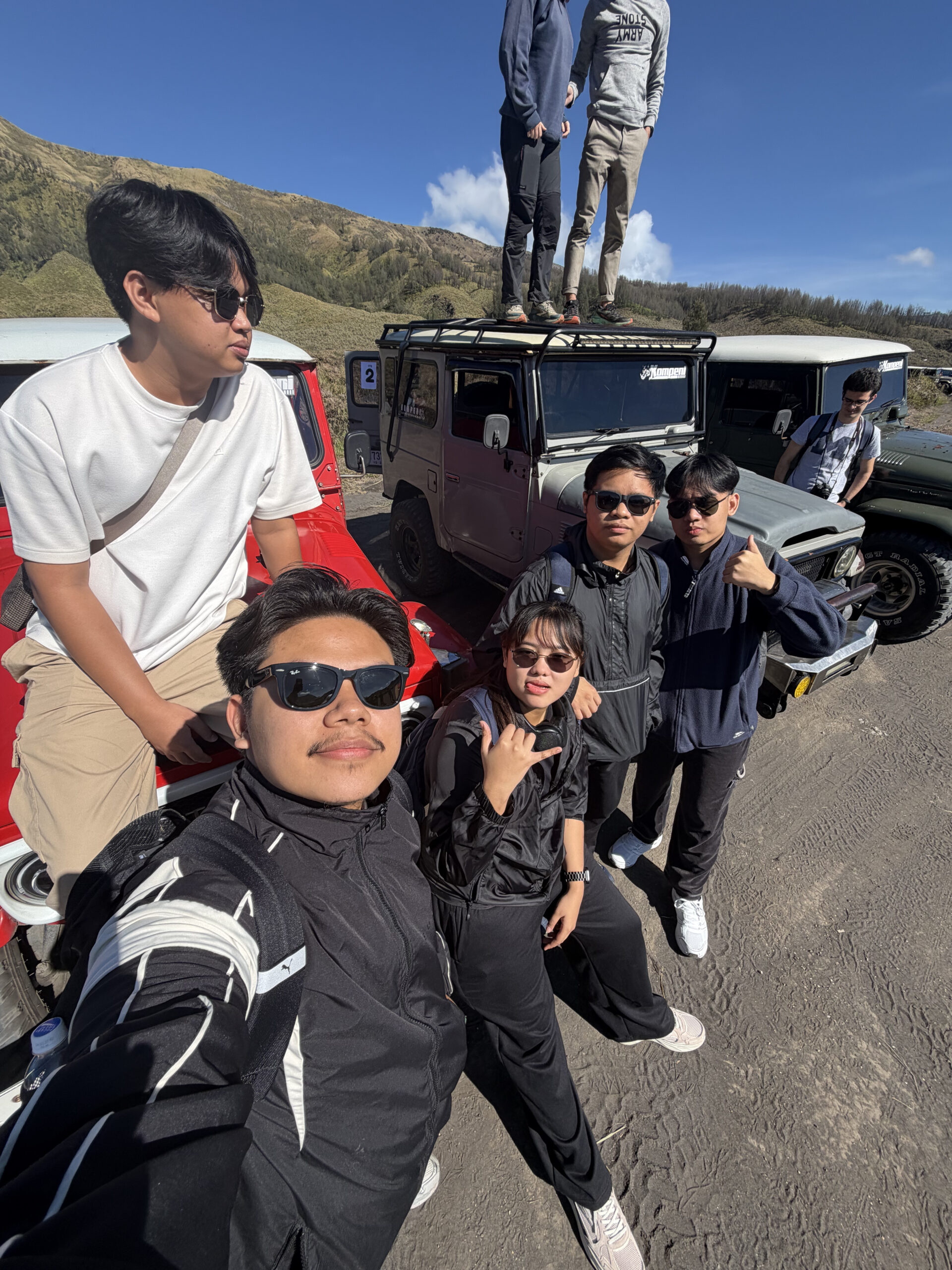
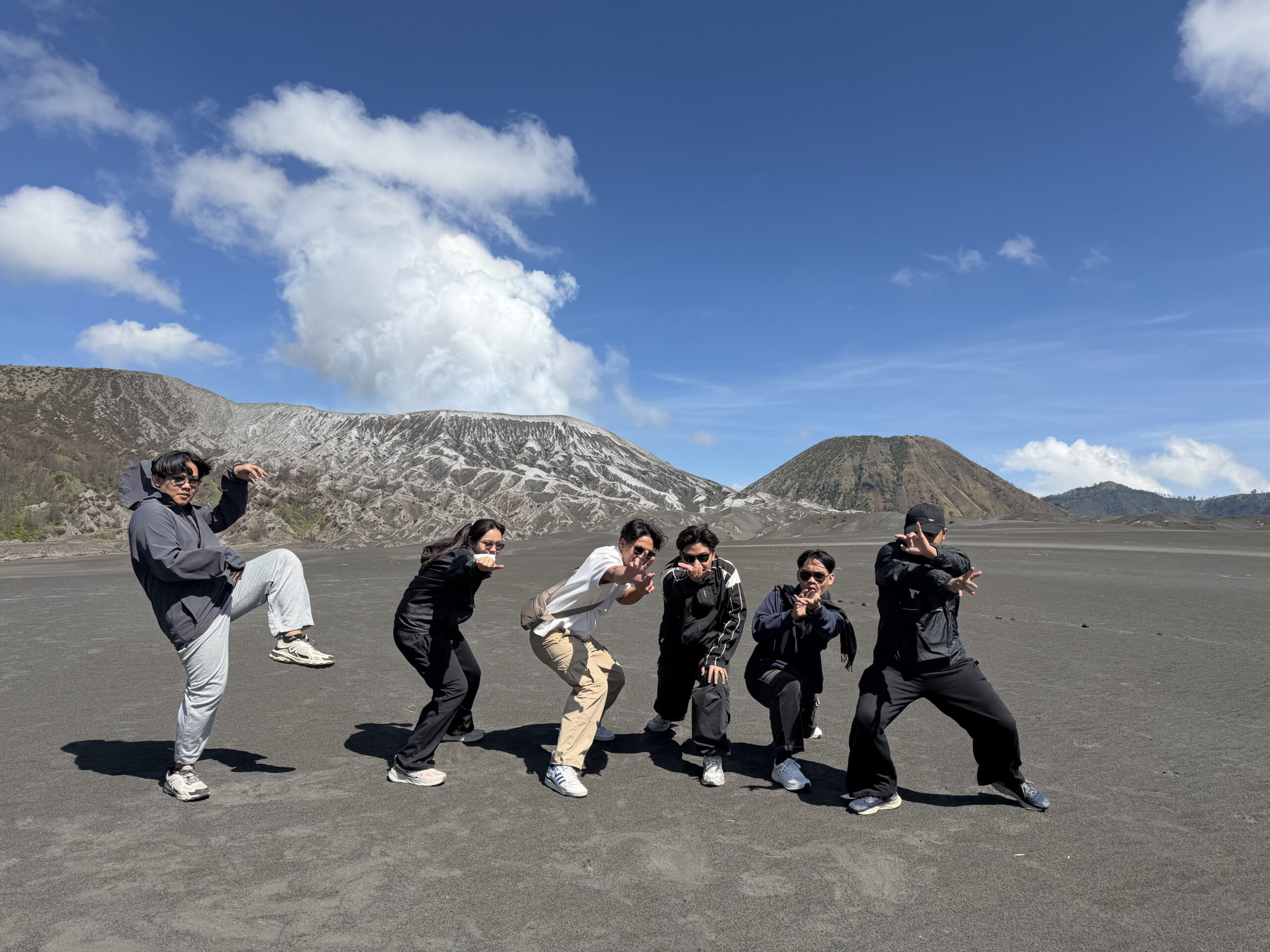
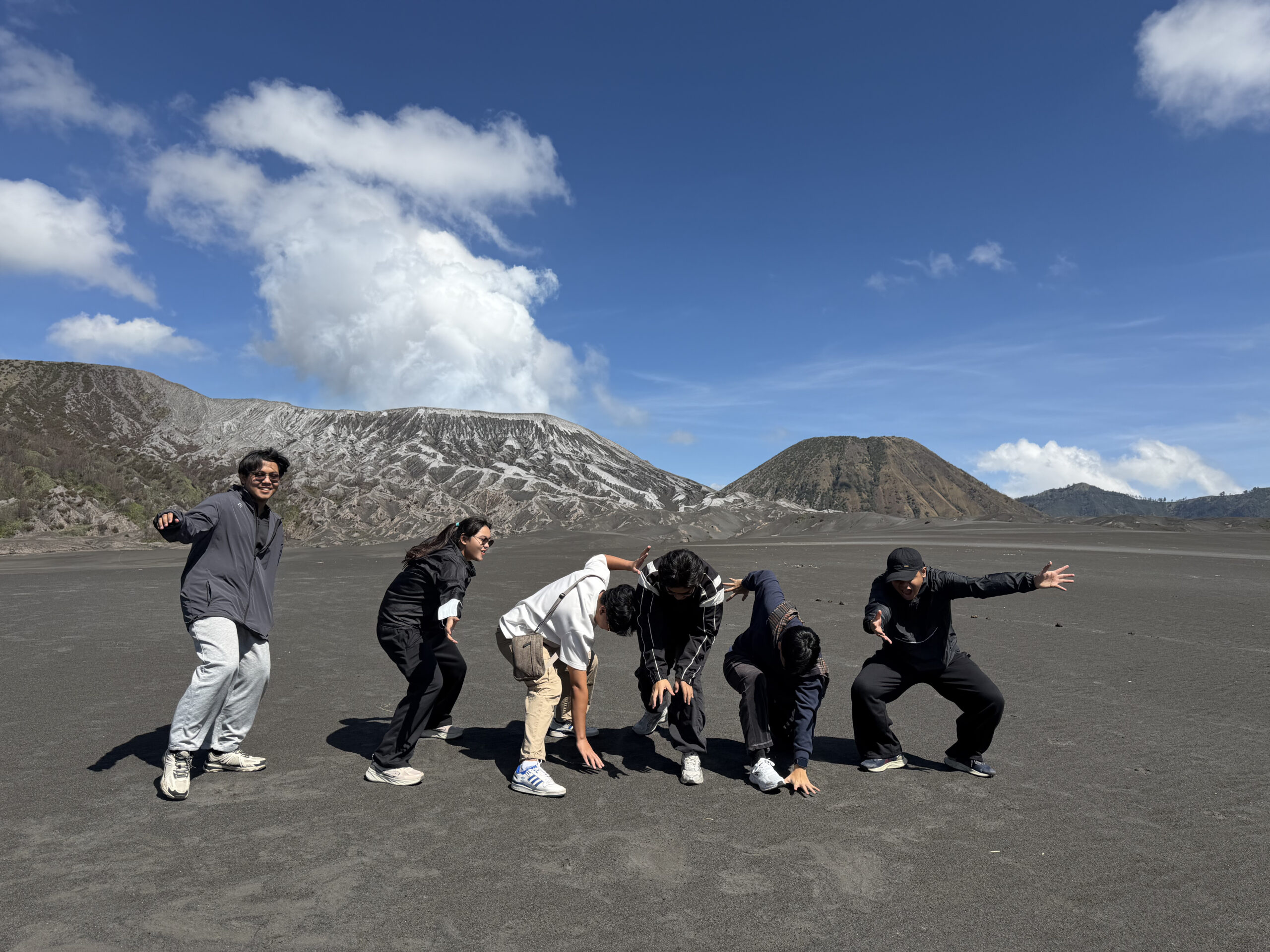
Beyond their technical work, the students participated in cultural and recreational activities organized by the ITS International Office throughout their stay, including an Orientation Week, Global Night cultural showcase, an adventure trip to Mount Bromo, and a Joint Cultural Camp held at Kaliwatu in Batu City. Meeting students from different countries, experiencing Indonesian culture and daily life, and building friendships within the international community at ITS added a meaningful personal dimension to the program that the students described as equally valuable to the technical experience.
All six students looked back on the practicum as one of the most significant experiences of their academic journey, describing it as an opportunity that bridged classroom theory and real professional practice in ways that coursework alone could not. “I hope this program continues to send students to environments like ITS, because it is the kind of challenge that actually changes how you changes how you think,” said Renato L. Peras. Luke Dominic A. Corpuz echoed the sentiment: “I wish that the SMU ICLMS Department continues to encourage students to take their practicum in the international arena, as this was a great experience that teaches students how life works with different perspectives from other people and cultures.”
SDG 4 – Quality Education
SDG 8 – Decent Work and Economic Growth
SDG 9 – Industry, Innovation and Infrastructure
SDG 17 – Partnerships for the Goals
Written by: Rocel Audrey J. Batara, ICLMS Department Head